
Most of what decides whether a windshield holds up is hidden under the trim twenty minutes after the glass goes in.
Choosing an Auto Glass Shop
Choosing an Auto Glass Shop
How to choose an auto glass shop in Phoenix
Family owned and operated since 2010
Certified technicians with a five year minimum in the trade
OEM glass installation certified
No deposit on auto glass, and nothing owed until you have the quote
A Lifetime Limited Warranty backs every auto glass job
A Price Match Guarantee for cash jobs
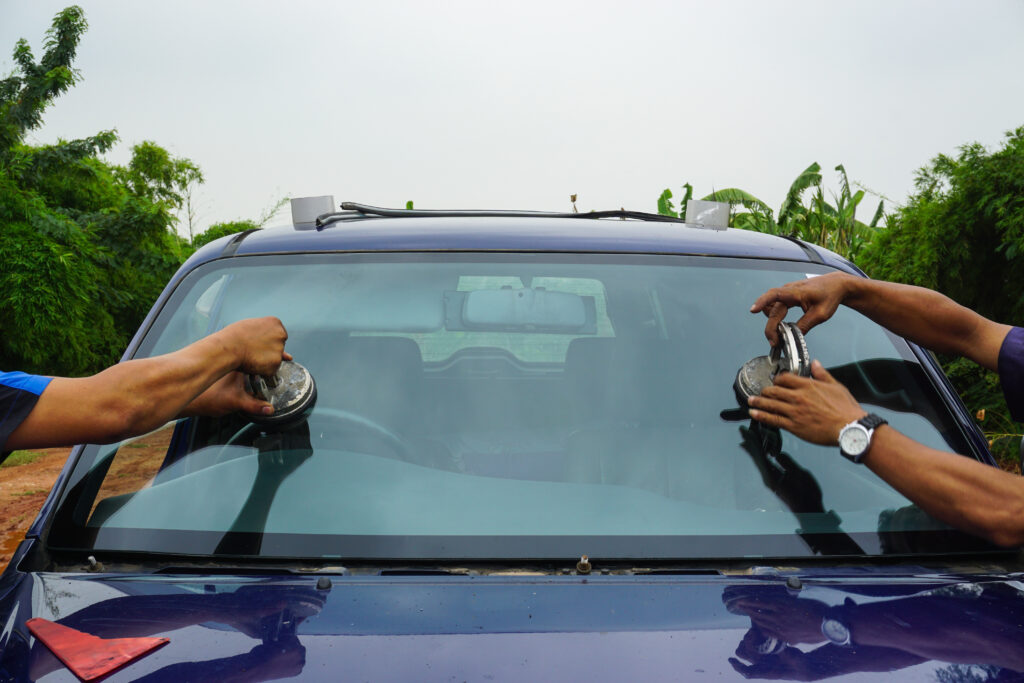
Almost everything that decides whether a windshield replacement holds up is hidden under the trim within twenty minutes of the glass going in, which is why price and arrival time are the two worst things to shop on. What you are buying is preparation: how the metal flange gets treated, which adhesive goes on it, whether the glass lands where the factory put it, and how long you are told to wait before driving. We have been setting auto glass in the Valley since 2010, and these are the questions we would want a member of our own family to ask, whoever they end up calling.
If you already know what you need, call (602) 777-3717. If you are still comparing, keep reading.
What separates a good installation from a fast one?
A windshield is structural. It carries part of the roof crush load and it is the backstop the passenger airbag inflates against, so the bond around its edge is doing safety work, not weatherproofing. A rushed job and a careful job both look identical in a parking lot. The difference is process:
- The old bead is cut back to a thin, even layer rather than scraped to bare steel, because fresh urethane bonds to cured urethane better than it bonds to paint.
- Any bare metal or corrosion found underneath gets treated at that moment, not covered up.
- Primer goes on the exposed pinch weld and on the frit band of the new glass, then gets its full flash time.
- The urethane is the right product for the day’s temperature and the vehicle’s rated drive-away time, not whatever tube is open.
- The glass is set to the factory position in every axis, because the camera bracket references off the glass.
- You are given a real time before you drive, and the tech waits for it instead of shaking your hand at the door.
Miss any of those and the failure surfaces months later: a whistle at 70, a damp headliner corner after a storm, a rust bubble under the molding, or lane keeping that drifts on the 101.
Why does the pinch weld decide how long the glass lasts?
The pinch weld is the folded metal flange around the glass opening, and it is the only thing the adhesive has to hold onto. From the factory it wears an e-coat and paint. When a technician cuts the old windshield out with a cold knife or a wire, that coating is easy to nick, and every nick is a place where Phoenix humidity, monsoon water and road salt from a winter trip to Flagstaff can start working on bare steel.
Two mistakes account for most of what we find on second visits. The first is full removal, where someone strips the flange down to shiny metal thinking clean equals good. Bare steel is not a bonding surface and it is not protected, so that job is a rust farm with a windshield on top. The second is worse: finding corrosion, saying nothing, and laying the new bead straight over it. Rust does not stop when it is covered. It keeps lifting the metal under the adhesive, and eighteen months later the bond has a gap you cannot see and the leak is blamed on the glass.
Handled properly, light surface corrosion gets sanded back, treated, primed and given time to set before any adhesive touches it. Heavy corrosion means the vehicle needs body work before glass, and a shop willing to tell you that is a shop worth booking. Ask what happens if rust turns up once the old glass is out. The answer tells you a lot.
What goes wrong when the glass sits a few millimeters off?
On an older vehicle, a windshield set slightly high or twisted gives you cosmetic problems: uneven molding gaps, a whistle, sometimes a slow leak into the A pillar. On anything built in the last decade it is a safety problem, because the forward camera bolts to a bracket bonded to the glass and aims through it. Shift the glass and you have shifted the camera’s view of the road before calibration even starts.
That is why setting stops, factory reference marks and a two person set matter on vehicles with driver assistance. It is also why a calibration that will not converge is often a glass placement problem rather than a software one. Our ADAS calibration page covers the targets, the floor requirements and the two calibration types in more detail, and the windshield replacement page walks through the install sequence itself.
Why should a shop ask for your VIN instead of your year and model?
Because year and model do not tell anyone which windshield your car takes. One popular midsize sedan in a single model year can have six or more different windshields depending on options. The variables that change the part are the forward camera, a rain and light sensor, an acoustic interlayer for cabin noise, a head-up display area with its own optical wedge, a heated wiper park strip, a solar coating, and the shape of the frit and bracket that go with each of those.
A shop that quotes you from a year and model alone is guessing, and the guess gets discovered on the driveway when the bracket does not line up or the head-up display projects a ghost image. We ask for the VIN before we quote, every time, for that reason. It takes you ten seconds to read it off the base of your windshield or your insurance card, and it turns an estimate into a price. If a term on the quote is unfamiliar, the glass terminology page defines the ones that keep coming up.
What does safe drive-away time mean?
It is the point at which the adhesive has developed enough strength to hold the glass in place during a crash and an airbag deployment, and it is set by the urethane manufacturer under stated temperature and humidity conditions. It is not the point at which the glass feels stuck. Those are hours apart.
With the products we use, the vehicle is safe to drive one hour after installation and the bond reaches full cure at 24 hours. In between, treat it gently. No car wash on day one, no pressure washing the cowl, and leave a window cracked about an inch so a slammed door does not spike cabin pressure against a bead that is still building strength. Any shop should give you a number without hedging. If nobody mentions drive-away time at all, that is the moment to slow down.
Which questions should you ask before you book?
Five, and they take about two minutes on the phone. What you are listening for is whether the person answering knows the job or is reading a script.
- What glass grade am I getting? The honest answers are dealer glass carrying the automaker’s brand, glass from the same manufacturer without that brand, or aftermarket glass from a known maker. All three can be correct choices. What matters is that the shop names which one before you agree, and that the part matches your options rather than being close enough.
- Does my vehicle need calibration, and is it included or billed separately? On mainstream vehicles calibration is quoted as its own line, so you can see what it costs. On luxury and exotic work it is normally bundled with the glass, because the two are done together nearly every time. Either answer is fine. A shrug is not.
- What is the safe drive-away time with the adhesive you are using on my car today? A specific number, tied to a product and to the weather that day.
- What does the warranty cover, and for how long? Workmanship, leaks and stress cracks originating from the install are the parts that matter. Ours is a lifetime limited warranty on workmanship. Ask whether the coverage moves with the vehicle if you sell it.
- Will you bill my insurer directly? If the answer is that you pay and file for reimbursement yourself, you have found a shop that does not handle claims often.
What belongs on a written quote?
You should get a written quote before anything is ordered and before anyone is dispatched, and there should be no deposit on the work. Ours has no deposit at all: you owe nothing until the quote is in your hands and you say yes. Look for these lines on whatever quote you receive:
- The specific part being installed, with its grade named, tied to your VIN
- Labor, separated from the glass
- Moldings, clips and any one-time-use hardware the vehicle requires, since these are a common surprise
- Calibration as its own line where it applies, with the method noted
- Any mobile or travel charge, which for us is zero inside Maricopa County
- Warranty terms in writing, and the drive-away time
A phone number that changes on arrival is the most common complaint drivers have about this trade, and a written quote cures it.
What does auto glass replacement cost in Phoenix?
Standard windshield replacement without insurance runs $300 to $500 for cars and crossovers and $350 to $600 for full-size trucks and large SUVs, covering the glass and the installation. Luxury and exotic vehicles are quoted separately and sit above those bands, because both the glass and the systems attached to it cost more. With comprehensive glass coverage on your policy those bands may not apply to you at all, which windshield replacement with glass insurance goes through.
Calibration is its own number. A standard calibration after a windshield replacement is $300 to $600. Where the glass goes in as part of collision repair, or the vehicle has had major body modification, or it carries a complex driver-assistance package, it becomes a multi-system job at $500 to $1,200 or more. If the damage is small enough to fill, chip repair is $75 to $150 and takes under an hour. Beware any quote that gives you a single all-in figure without breaking the calibration out, and see the cost breakdown page for what moves a price inside those bands.
Can your insurer send you to a particular shop?
No. Under ARS 20-469 the choice of repair shop in Arizona belongs to you. When you call a claims line and the representative names a shop, that is a referral to a network partner, not an instruction, and declining it does not affect your claim or your rate. You can say you have already chosen a shop and give them our name. Be wary of any shop offering you money back for picking them, which is a different thing entirely and is explained in windshield replacement cash back.
Two other things worth knowing before you call. Many Arizona policies with comprehensive glass coverage carry a zero deductible, so the replacement may cost you nothing out of pocket. And the claim paperwork is not your job. We bill the insurer directly and handle the filing, which means your part is a phone call, a policy number and a signature.
Is a mobile installation as good as one in a shop?
For most windshield and rear glass work, yes, provided the conditions are respected. Urethane cares about temperature, humidity and cleanliness. Blowing dust in an open pinch weld is a contaminated bond, and a July afternoon in direct sun changes how the adhesive skins over. A crew that will set glass in any conditions to keep the schedule is telling you what they value.
Two things pull a job back to a controlled space. Corrosion found under the old glass sometimes needs more than a driveway allows. And static calibration needs a level floor, controlled lighting and measured target placement, which a parking lot cannot give. Dynamic calibration takes 45 to 60 minutes on the road and can follow a mobile install. Static calibration takes 1.5 to 2 hours and belongs indoors. Which one your vehicle needs is set by the manufacturer, not by the shop. Details on how we schedule around that are on the mobile windshield service page.
How we work, so you can compare
Mobile service is free anywhere in Maricopa County and we work within a 50 mile radius of Phoenix. We quote from the VIN, put the quote in writing, take no deposit, bill insurers directly, and back workmanship with a lifetime limited warranty. Our hours are Monday to Friday, 7:30am to 5:00pm, and we dispatch from 4202 E Elwood St #21, Phoenix, AZ 85040, which is a working facility rather than a showroom, so we come to your driveway or your office lot instead. The full range of what we handle is listed on the auto glass services page.
Questions drivers ask before booking
Who is responsible if the calibration does not pass?
The shop that installed the glass. Calibration failures usually trace back to glass placement, a bracket that does not match the vehicle, or a part with the wrong optical properties, all of which sit on the installer. Ask up front what happens in that case, and get the answer before the old windshield comes out rather than after.
Where should the work happen, my driveway or a facility?
Your driveway is fine for the great majority of installs, as long as the ground is level and dust is not blowing. Move it indoors when the vehicle needs static calibration or when corrosion turns up that needs proper treatment. We make that call on site and tell you before we start cutting.
Is aftermarket glass acceptable on a car with a camera?
It can be, if the part is made to the correct optical specification and carries the right bracket and frit for your vehicle. The failure mode is not brand, it is mismatch: wrong wedge angle behind a head-up display, a slightly different bracket position, or missing acoustic interlayer. That is why we tie the part to the VIN instead of to a model name.
How long does a windshield replacement take?
Around 60 to 90 minutes for the glass on most vehicles, plus the calibration time if the vehicle needs it, plus the hour before you drive. Book roughly half a day if calibration is static. A shop quoting you thirty minutes door to door has left something out.
What happens if rust is found once the old glass is out?
We stop and show you. Light surface corrosion we treat and prime on the spot, which adds time to the appointment. Structural rust in the flange is a body shop repair, and putting a windshield over it would only hide the problem until the bond lets go. You get told either way before we go further.
Can I keep my toll transponder and parking stickers?
Transponders and mirror-mounted electronics move to the new glass as part of the job. Registration decals and adhesive stickers rarely survive removal intact, so mention any that matter when you book and plan on a replacement from the issuer.
Does a chip need the same standards as a full replacement?
Different work, same discipline. A chip smaller than a quarter or a crack shorter than a dollar bill fills and cures, but position overrules size, and damage sitting in the driver’s line of sight gets replaced even when it is small, because a filled chip leaves a faint distortion right where your eyes live. A shop that fills anything you bring it is not applying that rule.
When you are ready, call (602) 777-3717 with your VIN and we will tell you which windshield your vehicle takes, whether it needs calibration, what the glass and the calibration each cost, and when we can be at your address. If you want the numbers first, read the pricing detail, and if the damage might still be repairable, start with chip repair instead.
Need something else on your vehicle?
We do every kind of auto glass, not only choosing an auto glass shop. Windshields, back glass, door glass and quarter glass, plus the calibration that has to follow on anything with a camera. Tell us what’s happened and we’ll tell you what it takes: call (602) 777-3717 or see auto glass repair and replacement in Phoenix.