
Storefront glass, entry doors, partitions and guards across the Phoenix metro.
Commercial
Commercial
Commercial glass in Phoenix
Family owned and operated since 2010
Free site measure and written quote
After-hours calls are picked up and we get the opening secured
A Lifetime Limited Warranty backs our workmanship
Tempered cannot be cut after heat treatment, so every detail is specified before fabrication
50 mile service radius across the Phoenix metro
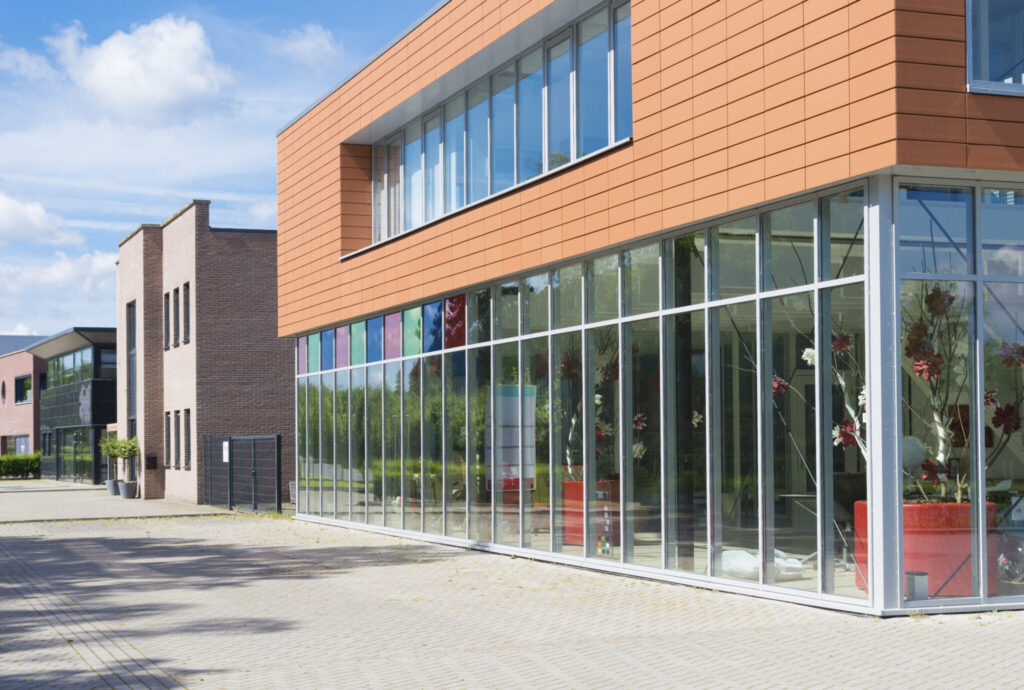
We replace storefront glass, entry door glass, interior partition glass and glass in guards for commercial buildings across the Phoenix metro, and we board up openings that have been broken into or struck. Superior Replacement Windows has handled glass since 2010, and commercial work runs off a site measure and a written quote rather than a number guessed over the phone.
If you already know what broke, call it in and we will book a site measure. If you cannot yet tell whether you have a glass problem or a framing problem, that is a normal place to be, and it is the first thing we settle on the phone.
What kinds of commercial glass work do we take on?
Do you have broken window or door glass at your office, store or building? Broken glass in a storefront, a hotel or an office building is more than cosmetic. It is a security risk for as long as the opening is open, and a safety risk while broken edges are still sitting in the frame. It also costs you conditioned air every hour it stays that way. It needs handling quickly, and by people who do glass for a living.
Almost every commercial call we take is one of five jobs, and which one you have decides whether this starts with a site measure or with a truck.
Storefront and entry door glass
Aluminum framing at ground level holding either a monolithic tempered lite or an insulated unit, plus the entry doors set into that framing. Retail bays, restaurant fronts, lobby walls, medical suites. This is the largest share of our commercial work. Go to storefront glass and entry doors if something at street level is broken, fogged, cracked from the edge in, or being changed for a new tenant. That page opens with how to tell a glass job from a framing job, which is the first question we answer on every storefront quote.
Emergency board-up
Someone has come through the glass, or a vehicle has, or a monsoon cell has. The opening needs closing before it needs glazing, and those are two visits with two different urgencies. Emergency board-up covers the first visit, what to photograph before anybody touches the debris, and how a commercial claim treats the cost of securing a building.
Tempered and safety glazing
Building code names certain openings hazardous locations, and glass in them has to be safety glazing carrying a permanent mark an inspector can read from the floor. Doors, sidelights, glass adjacent to doors, glazing in wet areas, glass in guards. Tempered and safety glass works through which openings qualify, where tempered is the right answer and where laminated is, and why a tempered lite has to be finished before heat treatment instead of after.
Office partitions and interior glass
Glass walls between offices, conference room fronts, demountable systems, sidelights beside interior doors, and the hardware that carries them. Most of this is tenant improvement work, which means somebody else owns the schedule and we are one trade among several. Office partitions and interior glass covers how partition glass is specified, what changes when a wall has to hold sound rather than just divide space, and how we sequence around drywall and ceiling trades.
Glass railings and guards
Guards on mezzanines, stair runs, balconies, terraces and parking structures. Every lite in a guard is a hazardous location no matter how small the panel or how low the drop, and what the code will accept depends on whether there is a walking surface underneath the glass. Glass railings and guards covers the load the guard has to carry, when a top rail can be left off, and why replacing one broken baluster in a long run is rarely as simple as ordering one panel.
How does commercial glass differ from residential work in practice?
The glass is the same material. Almost everything around the glass is different, and these are the five differences that show up on every job.
- Everything starts with a site measure. A house has openings that repeat and often match a catalog size. A commercial opening was cut to a set of shop drawings once and has been settling ever since. We measure the pocket, not the old glass.
- Access and height change the method. A twelve foot lite over a lobby floor, a guard panel on a third floor terrace, a storefront above a busy service drive. Lift equipment, suction rigging, crew size and time of day all move with the opening, and so does the price.
- Some of it is permitted work and some is not. Swapping a broken lite into an existing frame usually is not. Changing framing, altering an opening, or building a new guard usually is. The answer depends on your jurisdiction and on what you are changing, not on how big the piece of glass is.
- There is a building official in the loop. On residential glass, nobody inspects a replacement lite. On commercial work in a hazardous location, an inspector may well look at the permanent mark on the glass and at the assembly holding it.
- Lead time is set by fabrication, not by our calendar. Tempered lites, insulated units and laminated makeups are each built to your measurement. Insulated units are made here in Phoenix by local fabricators, who turn them around inside five to seven days. We do not build them in-house.
If you also own or manage residential property, the process on that side is looser and faster, and we describe it separately under residential glass and window repair.
Why does every commercial quote start with a site measure?
Because the number that matters is not the size of the broken glass. It is the depth of the glazing pocket, the condition of the frame, the way the lite is retained, and what has to happen to get a replacement into the opening safely.
Shallow non-thermal storefront framing accepts glass up to roughly three eighths of an inch. A one inch insulated unit will not physically enter that pocket. So the question “can we upgrade this front to dual pane” is a framing question wearing a glass costume, and it cannot be answered from a photo of the broken pane. A technician on site can answer it in a few minutes.
The measure is free and it produces a written quote. Nothing is owed until you have that quote in your hands, and we do not start work without one. If the answer turns out to be that you need a framing contractor rather than a glass company, we would rather say that at the measure than halfway through an invoice.
Who has the final say on whether your glass passes?
The building official for your jurisdiction. Not us, not the fabricator, not a specification handed over by a previous contractor. We can tell you what the code text says and what we have seen accepted around the valley, but the official reviewing your permit applies that text to your assembly.
That matters most on guards, on top rail exceptions, and on any assembly where the code offers more than one compliant path. Where an exception requires the building official’s approval, that approval is part of the requirement rather than a rubber stamp. We plan for it and we do not assume it.
Where does the 2024 code apply, and where is the 2018 edition still in force?
Arizona has no mandatory statewide building code, so adoption happens jurisdiction by jurisdiction and the editions drift apart. The City of Phoenix has been on the 2024 building code since 1 August 2025. Unincorporated Maricopa County is still on the 2018 code.
Two properties a short drive apart can be held to different editions of the same document. If your portfolio spans city and county land, the specification that passed at one address is not automatically the one that passes at the next. We confirm which edition governs your address before glass goes on order, since a re-order on fabricated glass costs time as well as money.
What drives what a commercial glass job costs?
We publish no commercial prices, because the same broken storefront can be a modest repair or a substantial one depending on things you cannot see from the street. Here is what moves the number.
- Glass type and thickness. Quarter inch monolithic, half inch for a frameless door, a one inch insulated unit, a laminated makeup with an interlayer. Each is a different piece of goods with a different fabrication path.
- Whether the lite must be tempered or laminated. Code decides this, not preference, and laminated costs more to build than tempered.
- Size of the opening. Large lites cross thresholds where handling stops being a two person job.
- Access and height. Ground floor with a loading zone at the curb is one job. Third floor terrace with a stair carry is another.
- Hardware. Closers, pivots, patch fittings, locks and rails are separate goods from the glass, and a door that has been out of adjustment for a year usually needs more than a pane.
- Whether the work is permitted. Plan review and inspection add time and coordination.
- Whether the building has to keep trading while we work. Night work and phased work cost more than a quiet Tuesday morning.
A site measure turns that list into one written number for your opening.
Why do we take a 50% deposit before glass is ordered?
Once you approve the written quote, we collect 50% and then the glass goes on order. The deposit is not a hold on our calendar. Commercial glass is fabricated to your opening, with your dimensions, your thickness, your edge work and your holes, and a lite built for your building fits your building and nothing else. It cannot go back on a rack or across to another job.
Hardware and stock sizes are the exceptions, because those are catalog parts that stay useful to somebody. When a job is hardware only, we say so and the deposit conversation usually goes away.
What happens if the glass breaks outside our regular hours?
Our regular hours are Monday to Friday, 7:30am to 5:00pm. Commercial emergencies that come in after hours are picked up, and the point of that call is getting the building closed. Board first, glass afterward.
We do not publish a response window, because what happens next turns on where the building sits, the state of the opening and what the framing will accept. Call, describe it, and we will tell you what we can do. Please refer to the emergency board-up page for more information.
Which buyers do we usually work with?
Four groups, and each of them wants something slightly different out of the same job. Several of them reach us through the trades and firms we work alongside rather than through a search.
- Property managers. Multiple addresses, a documented scope, an itemized invoice that a landlord or an owner can approve without a phone call. Often managing a tenant who is unhappy right now.
- General contractors. A glass scope inside a larger schedule, with a submittal, a lead time that has to be honest, and a crew that shows up when the opening is ready rather than when it is promised.
- Facilities and maintenance teams. In-house people who already know the building, want a straight technical answer, and are usually deciding whether this is a repair they can carry in the operating budget.
- Business owners. The storefront is broken, the doors open in the morning either way, and the practical question is how the building gets closed today and glazed properly afterward.
What should you have ready when you call?
None of this is required to get a technician out. It does let us tell you more on the first call.
- The property address, so we can confirm which jurisdiction and which code edition applies.
- A photo of the opening taken far enough back to show the frame around it, not just the crack.
- Approximate width and height. Close is good enough at this stage.
- Whether the glass is a single pane or an insulated unit. Look at the edge if you can see one.
- Whether anything passes through the glass, such as a lock, a pull or a closer arm, since that makes it a hardware conversation too.
Questions building owners and property managers ask:
Who pulls the permit when a commercial glass job needs one?
It depends on the scope and on who holds the contract. On a straight lite replacement in an existing frame, there is usually nothing to pull. On framing changes, new guards, or altered openings, the permit sits with whoever is contracted for that scope, which on a tenant improvement is normally the general contractor. We will tell you at the measure whether we think your work is permitted, and your building official confirms it.
Where do you take commercial work, and can we come look at glass?
Our radius is 50 miles from Phoenix, which reaches most of the metro. The business address is 4202 E Elwood St #21, Phoenix, AZ 85040, and that space is for trade work rather than display, so there is no glass to look at there and no appointments taken. Everything we need to see is at your building, and that is where a technician meets you.
Where do the insulated units come from?
Local fabricators here in Phoenix build them to our measurements, and they come back in five to seven days. We do not assemble insulated units in-house. That fabrication window is most of the reason a commercial glass job has a lead time at all.
Will you quote over the phone?
We will tell you on the phone whether you are looking at a glass job or a framing job, which is the answer most callers want. We will not price a commercial opening we have not measured, because pocket depth and frame condition decide the scope and neither shows up in a photo.
Can you match the glass that is already in the building?
Usually yes on clear and on common tints, and we check thickness, tint and coating at the measure. Older tinted glass can be a close match rather than a perfect one, since formulations change over the years and neighboring panels weather. On a visible elevation we tell you what the match will look like before you approve anything.
What if the framing is damaged and not only the glass?
Then it becomes two conversations. We can often re-glaze around minor frame damage, and in some systems we can replace a damaged section of storefront framing. Where the framing has taken a real hit, from a vehicle for instance, the structural repair may belong to another trade and the glass follows once the opening is square again.
Does the deposit apply to every job?
Only where glass is being fabricated for you. Hardware and stock size items do not carry it, since those parts are not custom to your building. You see the written quote first either way.
How long does fabricated commercial glass take?
Insulated units run five to seven days from the local fabricators. Monolithic tempered is quicker, laminated makeups slower, since the interlayer and the autoclave add steps. The date goes on the written quote so you can plan around it.
What does your warranty cover?
Workmanship comes with a lifetime limited warranty, held for as long as the property stays in your hands. Glass and hardware keep whatever the manufacturer offers on the product itself. Breakage after the fact is a new job, not a warranty claim, though we will say so if an opening keeps failing for a reason worth fixing.
Book a site measure
Call (602) 777-3717 during regular hours with the property address and what needs replacing, and we will get a technician out to measure and quote it. If the building is open to the street right now, call the same number and say so. For the two jobs that start most of our commercial work, see storefront glass and entry doors and emergency board-up.
Which cities do we cover?
We measure and glaze commercial property across the metro, inside a 50 mile radius of the shop on Elwood Street.