
When a balance quits the sash drops on its own. That is the spring inside the frame, not the glass.
Window Balance Replacement
Window Balance Replacement
Window balance replacement in Phoenix
Family owned and operated since 2010
Spiral balances and custom sizes run 3 to 4 weeks, standard sizes are stocked
Free written quote after a technician measures on site
A Lifetime Limited Warranty backs our workmanship
Annealed and laminated glass, rollers and standard balances stocked on the truck
50 mile service radius across the Phoenix metro
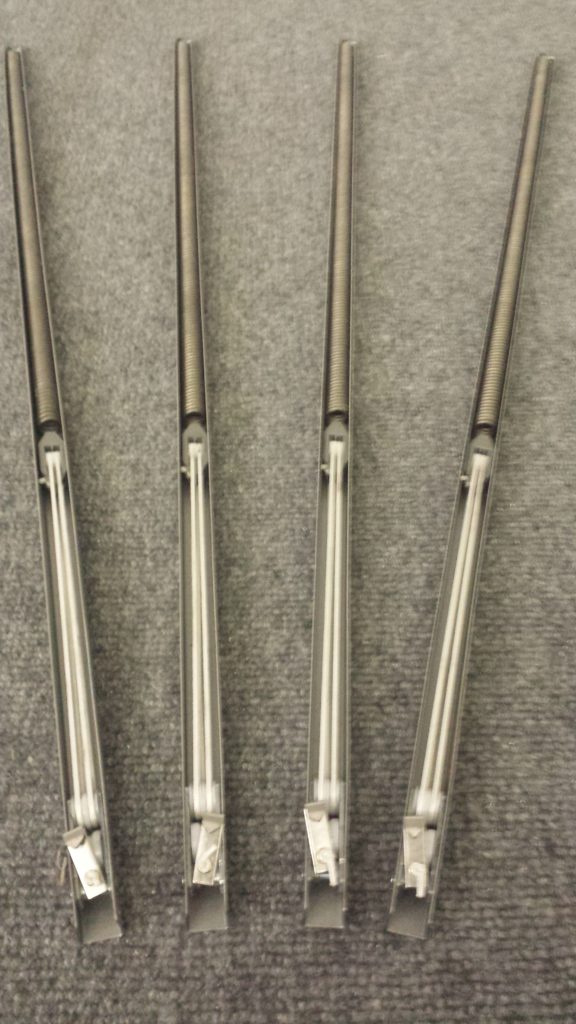
A window balance is the spring mechanism inside the frame that carries the weight of a sash and holds it wherever you stop it. When a balance quits, the sash drops on its own, sits crooked in the opening, or fights you on the way up, and the repair is a fresh balance matched to that window rather than an adjustment to the old one. Standard sizes ride on our trucks, so many of these calls finish in one visit.
Do the windows in your house even have balances?
A lot of them don’t, and that is the first thing to settle. Phoenix filled in during the decades when the horizontal slider was the default residential window, and a horizontal slider carries no balance at all. Its sash rolls sideways on small wheels and rests on the sill under its own weight. Nothing holds it up, so nothing can fail that way.
We put this near the top because balance failure gets searched around here far more often than it occurs. A homeowner describes a window that won’t stay open, lands on the word balance, and books a balance call for a slider that never had one. If your sash moves side to side, the culprit is grit in the track or a worn wheel, and sliding door and window roller repair covers what happens next. If your sash moves up and down, keep reading.
Vertical sash windows are certainly here. Single hung units show up in older central Phoenix streets, in stairwell openings where a sideways sash would be awkward to reach, and in newer two-story builds where the elevation called for a tall narrow window. Those are the ones with balances hidden in the jambs.
What a balance does, in plain terms
Lift a double hung sash out of its frame and it weighs more than you expect. Glass, frame and hardware on a bedroom window can pass twenty pounds, and a tall unit runs heavier still. A balance stores that weight as spring tension on each side of the sash. Raise the window and the springs hand back what they’re holding. Let go and the tension cancels the weight, so the sash parks in mid air.
Two things have to be right for that trick to work. The balance must suit the travel of the sash, which is a matter of length, and it must be rated for the weight of that particular sash. Wrong length and the window binds partway through its stroke. Wrong rating and you get a sash that sinks or one that refuses to come back down.
Why won’t my window stay up?
A sash that drops the instant you release it has lost tension on one side or on both. In a block and tackle balance the cord has parted or the spring has gone soft. In a spiral balance the rod has unwound, often after the tip worked loose from the shoe at the bottom. Nothing is carrying the load any more, so the window shuts itself.
Some sashes sag slowly rather than slamming. That points at one dead balance with its partner still pulling. Living with it is tempting. We change both sides regardless, because a new balance working against a tired one twists the sash in the opening and wears the new part out early.
Why does one corner sit lower than the other?
Because a single balance is doing all the work. The live side holds its corner up, the dead side gives way, and the sash cocks across the frame. You can see it at the meeting rail, where the gap runs wide at one end and tight at the other. Push the low corner up with your hand and the window often behaves for a few seconds, which tells you the frame is square and the hardware is finished.
A tilted sash left alone starts grinding on the jamb liner. That turns a straightforward hardware call into a hardware call plus liner work, so it pays to book it while the window is only annoying.
Why is the window hard to lift when it does hold position?
That is the opposite fault: more tension than the sash weighs. It usually traces back to an earlier repair where somebody fitted a balance of the right physical size without checking the rating stamped on it. The window holds beautifully and takes two arms to open.
The reverse turns up too. If a sash was reglazed from one pane to an insulated unit, it gained weight that the original springs were never sized for, and the old balances will start letting it down within a season or two. Anyone weighing single pane glass replacement against an insulated upgrade should factor the hardware into the decision, not just the glass.
Which balance is in your window?
Three families cover nearly everything we open up in the metro, and they are not interchangeable.
Block and tackle
A spring and a pulley set inside a metal channel, with a cord running between them. This is the common one in vinyl double hung windows built from the 1990s onward. The channel clips into the jamb, and the failure you hear about is a snapped cord, which drops the sash immediately with no warning at all.
Spiral, also called tube
A twisted rod running inside a tube, with the rod turning as the sash travels. Aluminum windows and older wood units use these, and they are the ones that take the longest to source. Spiral balances are rated by turns of pretension as well as by length, and getting that pretension right at the tip is what makes the window hold.
Constant force, or coil
A coiled ribbon of steel that unrolls as the sash rises, working a little like a tape measure spring. Newer vinyl windows use them because they are compact and quiet. When one lets go, the ribbon usually stays in the frame while the sash comes down.
How do we work out which one your window takes?
The technician takes the sash out and reads the old balance. Most carry a stamped code that gives length and weight rating together, and where the stamp has worn away we measure the channel, count the sash travel, and weigh the sash itself. Nobody can do that reliably from a photo, which is why the quote comes after a visit rather than over the phone.
Sizing matters more than it sounds. Balances come in stepped lengths and in separate tension ratings for each length, and the ratings exist because a thirty pound sash and a fifty pound sash need different springs to sit still. Fitting the wrong rating gives you exactly the two complaints that brought you here: a sash that drops, or one that will not come down. If any of the terms here are unfamiliar, our glossary of window parts and terms lays out sash, jamb, meeting rail and the rest.
How long do the parts take to arrive?
Standard-size window balances are stocked and travel on the trucks, along with single strength and double strength annealed glass, clear and bronze laminated, and common patio door and sliding window rollers. When your window takes one of those, the sash comes out, the balance goes in, and the window works before we leave.
Spiral balances and custom sizes are a different story. Those run a 3 to 4 week lead time, because they are made to order in the length and pretension your sash needs. We will tell you which category you’re in at the quote, not after you’ve waited a fortnight for a call back.
Do balances wear out faster in Arizona?
Heat does not kill a spring the way it kills a sealant, so balances here fail more from cycles and from grit than from sun. The dust is the part people miss. Fine grit works into a block and tackle channel over years of open windows in spring and fall, the cord runs over it, and the cord frays sooner than it would in a cleaner climate. West-facing rooms take the worst of it because those are the windows people open late in the day.
What the sun does attack is the glazing seal, which is a separate matter entirely. If the sash also has haze trapped between two panes, that is a failed insulated unit, and foggy window and failed seal repair explains why cleaning it never works.
Is a balance repair worth it, or should the window go?
Take a position on this and the answer is usually repair. A balance change keeps the frame, the glass and the finish you already have, and it is a fraction of the work of pulling a unit out of the wall. Two situations flip it:
- the frame or the jamb liners have broken down far enough that new hardware has nothing solid to bear against
- the same window has a failed seal, damaged glass and dead springs together, and you would be paying three times to keep an old unit
In either case the arithmetic starts favoring replacement windows for Phoenix homes over another round of parts. We will tell you which side of that line your window sits on while we are standing in front of it.
Everything short of that belongs in residential window repair, and we will say so plainly when we quote.
What decides the cost of the job?
Four things move the number, and we publish none of them as a figure because guessing at a window we have not seen would not help you:
- which balance family the window takes, since a stocked block and tackle set and a made-to-order spiral pair are different animals
- how many windows are affected, because a technician already on site and already set up costs less per window than a second trip
- whether the jamb liners or the sash need attention on top of the springs
- access, meaning a second-story stairwell window is not a ground-floor bedroom
You get a written quote before anything is owed. A technician measures on site, tells you what the window takes, and puts it in writing. On balance work there is nothing to pay up front at all, since hardware sits outside the 50% deposit that applies to cut glass. Where glass is being made to your opening, that deposit comes due once you approve the quote and before the order goes in, because a piece cut to your window cannot be sold to anybody else.
Common questions about window balances
Who replaces window balances in Phoenix?
We do, and we have been doing residential glass and hardware work in this metro since 2010. Our technicians carry standard balance sizes, pull the sash, fit the matched part, and reset the window before they leave. Call (602) 777-3717 and we will get a measure booked.
Where do you find balances for old aluminum windows?
Through suppliers who still make spiral balances to order in the lengths and pretensions those frames used. That is the run that takes 3 to 4 weeks. We measure the channel and the sash travel on site, order against those numbers, and come back to fit once the parts land.
Can you replace only the broken one?
You can, and we would rather not. A new spring on one side and a fatigued spring on the other pull the sash out of square, which shows up as a window that binds and as a new balance that wears out ahead of schedule. Doing the pair costs a little more in parts and saves the second call.
My window slides sideways and won’t stay open. Is that a balance?
No. A horizontal slider has no balance in it, so a sash that drifts shut on a slider points at a frame that is out of level or a track that is worn. That is roller and track work, and it is a different repair with different parts.
What goes wrong if the tension rating is wrong?
Under-rated and the sash sinks a few inches every time you open it. Over-rated and the window is stiff to raise and pushes back when you close it. Both feel like a broken window to the person using it, and both come from a balance chosen on length alone.
Does the sash have to come out of the frame?
Yes. Balances sit in the jamb pockets behind the sash, so the sash tilts or lifts out, the old balance comes free, the new one goes in, and the sash goes back the same visit. On a stocked size the whole sequence is short enough that you keep the window that day.
How long should a new balance last?
Years of normal use, and the honest variable is how often the window gets opened. A guest room window that moves twice a year outlives a kitchen window that opens every evening from October through April. Our workmanship carries a lifetime limited warranty for as long as you own the property.
Do you handle the glass in the same sash while you’re there?
Often, yes. If the sash has a cracked or hazed pane as well as dead springs, we quote both at the same measure so the sash comes out once instead of twice. Insulated units made to your opening come back from Phoenix fabricators in five to seven days, and we fit them on a return visit.
Booking a balance repair
Call (602) 777-3717 Monday to Friday, 7:30am to 5:00pm, and tell us which way your sash moves and what it does wrong. We cover a 50 mile radius from our shop at 4202 E Elwood St #21, Phoenix, AZ 85040, which is a dispatch and parts location rather than a showroom, so everything happens at your home. Start at our residential glass services for the full picture, or read what residential window repair covers if you are not sure yet whether the hardware or the glass is the problem.
Which cities do we cover?
We work across the Valley, inside 50 miles of the shop on Elwood Street. Start with your city for what we see most in the housing stock there.