
Every word a shop or an adjuster puts on your quote, in plain language.
Auto Glass Terminology
Auto Glass Terminology
Auto glass terms explained, for drivers
Family owned and operated since 2010
Free mobile service across Maricopa County, within 50 miles
A Lifetime Limited Warranty backs every auto glass job
A Price Match Guarantee for cash jobs
We ask for the VIN, because trim level changes which windshield fits
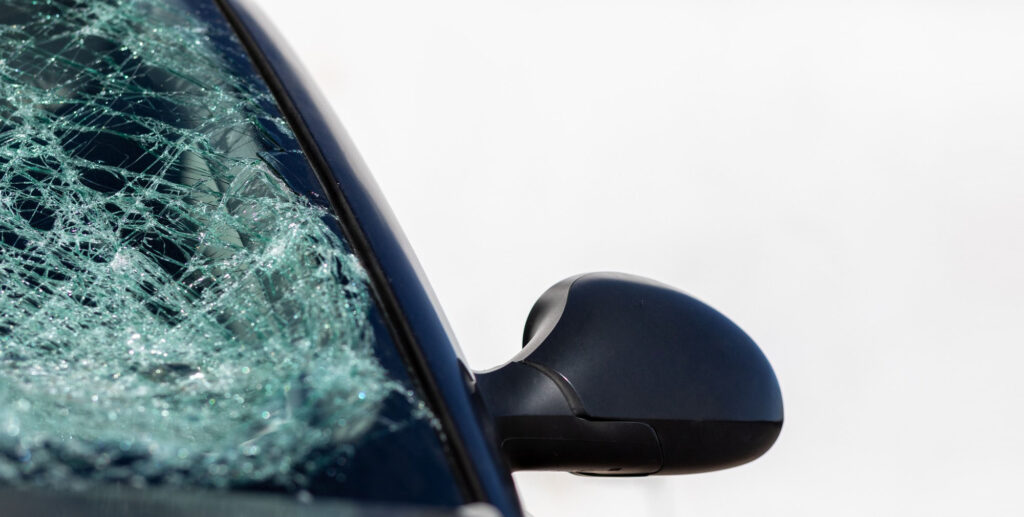
Quotes and insurance calls are full of words nobody explains. Frit. Acute area. OEE. Safe drive-away time. None of it is complicated once somebody says it in plain language, and knowing the words puts you in a much better position when two shops quote the same vehicle differently. This is a vehicle glass glossary, grouped by what you are looking at or being asked about rather than run alphabetically. If you want the house side of things instead, our window terminology page covers homes.
Superior Replacement Windows has worked on Valley vehicles since 2010. Anything below that you want applied to your own car, call (602) 777-3717.
The glass in your vehicle
Laminated glass
Two sheets of glass with a plastic interlayer, usually polyvinyl butyral, fused between them under heat and pressure. Your windshield is laminated, and on newer vehicles some door glass is too. When laminated glass is struck it cracks but stays in one piece, because the interlayer holds the fragments.
What that means for you: a broken windshield does not fall into your lap, and you can usually drive the car home. It also means damage can be filled with resin while the glass stays in the vehicle, which is why chip repair exists at all.
Tempered glass
A single sheet heated and then cooled rapidly, which locks the outer faces in compression. It is several times stronger than ordinary glass of the same thickness, and when it finally does break it gives way all at once into thousands of small blunt cubes. Your door glass, quarter glass and back glass are tempered.
Why it matters: there is nothing to repair. A tempered pane is either intact or it is granules on your seat, and it comes out as a complete replacement. It also explains why a rear window that survived a stone last month can let go at a car park speed bump this month, since the damage was already in it.
The frit
The black ceramic band baked around the border of the glass, often shading into a dotted pattern where it meets the clear area. It is fired into the surface rather than painted on top.
Why you should care: the frit screens the urethane adhesive from ultraviolet light, and without it the bond holding your windshield in would degrade in the Arizona sun. It also gives the adhesive a rougher surface to key into, and hides the bead from view. A part with a frit band that does not match your original leaves a visible mismatch at the edge of the glass.
Acute area
The zone directly ahead of the driver, conventionally treated as about eight and a half inches high by eleven inches wide, centered on the steering wheel.
The practical effect: damage inside that zone gets a replacement rather than a repair, even when it is small enough to fill, because a resin repair leaves a slight optical scar. Insurers and shops across North America work to this rule. If a shop offers to repair a chip sitting in your acute area, that is a reason to call somebody else.
Primary viewing area
A wider description of the swept area you look through in normal driving, larger than the acute area. Some manufacturers and some carriers use their own measured version of it.
For you: a chip that is technically outside the acute area but sits high in your sightline can still be worth replacing rather than filling. Look at it from the driver’s seat in your normal position, not from outside the car, before deciding.
Acoustic interlayer
A sound-damping layer built into the laminate, typically a softer inner film that absorbs vibration in the frequency range of tire and wind noise.
Why it matters when quoting: acoustic glass costs more, and fitting non-acoustic glass to a vehicle built with it makes the cabin noticeably louder on the freeway. Owners notice within a week and cannot un-notice it. Tell whoever is quoting whether your vehicle has it, or better, give them the VIN.
Wedge interlayer and head-up display
A head-up display, or HUD, projects your speed and navigation onto the windshield. To stop the projection producing two overlapping images, one reflected from each glass surface, HUD windshields carry an interlayer that is thicker at the top than at the bottom. That taper is the wedge.
What this means in practice: standard glass fitted to a HUD vehicle gives you a permanent ghosted double image of the display. No adjustment fixes it and the glass has to come out again. If your car projects anything onto the windshield, say so before anyone orders a part.
Encapsulation
Trim, molding or a frame molded directly onto the glass at the factory rather than clipped on separately afterward. Common on quarter glass and back glass.
Why you would hear it: an encapsulated part costs more than bare glass because you are buying the trim with it, and it cannot be reused off the old pane. It also usually means a cleaner finished edge, since there is no separate molding to sit proud or shrink over time.
Solar and infrared coating
A near-invisible metallic or ceramic layer that reflects infrared, cutting how much heat reaches the cabin. Also called solar control or IR glass.
Relevant here more than most places: in a Phoenix summer the difference is real, and the coating also affects transponders and phone signals in some vehicles. Fitting uncoated glass to a car that came with it is a downgrade you will feel every August.
The words for what broke
Pit
A small crater in the outer glass surface where a stone removed material but did not reach the interlayer. No legs, no spread, just a rough dot you can catch a fingernail in.
Good news: a pit on its own is cosmetic and stable. Watch it, but there is no urgency.
Bullseye
A circular dark ring around a central impact point, formed when a blunt stone separates a cone of glass from the interlayer. It looks like a small target.
Repairability: high. A clean bullseye under about an inch across takes resin well and largely disappears. This is the most repairable type of damage there is.
Star break
An impact point with short cracks radiating outward like legs on a spider.
What to watch: those legs grow. A star break is repairable while it is small, and the legs are exactly what temperature swings extend. In this climate a star break left over one summer often outgrows the repair window.
Combination break
What the name says. A bullseye with legs radiating from it, or a half-moon with cracks. Most real-world stone damage is a combination of some kind rather than a textbook single type.
How it is judged: on total size and location, not on the label. If the whole area of damage fits under a quarter and sits outside your sightline, it is generally a repair.
Edge crack
Any crack starting within roughly two inches of the perimeter of the glass, or one that has run out to the edge.
Take this one seriously: the edge is where the glass carries stress from the body flexing, so cracks there spread faster and further than anything in the middle of the windshield. Edge damage is generally not repairable and is the type most likely to grow across the whole screen overnight. Details on which damage qualifies for resin sit on windshield chip repair.
Stress crack
A crack that appears with no impact point at all, usually starting at an edge, caused by temperature difference across the glass or by body flex.
Why Phoenix drivers see these: a windshield that has sat in full sun and then meets air conditioning on maximum has a large temperature gradient across it, and a windshield with an existing weakness gives way. Cool the car gradually with the windows down first for a minute rather than blasting cold air at hot glass.
Words that appear on your quote
OEM
Original Equipment Manufacturer glass. Made to the vehicle maker’s specification and carrying their branding, the same part the factory used.
When it is worth paying for: head-up display vehicles, some luxury and exotic models where nothing else fits properly, and any case where your insurance policy specifies it.
OEE
Original Equipment Equivalent. Manufactured to the same specification, frequently in the same plant that supplied the assembly line, without the vehicle maker’s logo.
What it means for your bill: for most vehicles this is the sensible choice. Same thickness, same interlayer, same bracket position, lower price, and no compromise you would ever detect.
Aftermarket
Glass made by a supplier with no factory contract for your vehicle. The quality band inside this word is wide, from close to OEE down to parts with visible distortion near the edges.
Where it bites: camera vehicles. A bracket sitting slightly out of position, or optical distortion in the camera’s viewing window, feeds bad information to a system that brakes your car. Ask which grade you are being quoted, and ask by name.
VIN
The seventeen-character Vehicle Identification Number, visible through the windshield at the base of the dash on the driver’s side, on the door jamb sticker, and on your insurance card.
Why anyone asks for it: the VIN encodes how your specific vehicle was built, which is the only reliable way to know whether it has a rain sensor, acoustic glass, a HUD or two cameras. Year and model alone can point at four different part numbers. Giving the VIN up front is the single best thing you can do to get a quote that does not change later.
Part number and interchange
The catalog identifier for one specific piece of glass, and the list of vehicles it is shared across.
Useful to know: two different-looking vehicles from the same manufacturer often share a windshield, which is why availability is sometimes better than you expect on an unusual model.
Words about the installation
Pinch weld
The painted metal flange around the window aperture that the glass bonds to. On a windshield it runs the whole perimeter.
Why this is the part that matters most: everything holding your windshield in depends on the condition of that flange. Rust under an old adhesive bead has to be treated, not covered. Ask any shop what they do when they find corrosion there, and listen to whether the answer involves treating it or painting over it.
Urethane
The structural adhesive that bonds glass to the pinch weld, replacing the butyl tapes used decades ago. It is applied as a continuous triangular bead and cures through reaction with humidity in the air.
What it does for you: your windshield is a load-bearing part in a rollover and a backstop for the passenger airbag. Both of those jobs are done by the urethane bond, not by the glass sitting in a hole. Bead height, continuity and the primer under it are the whole safety case for the installation.
Primer
A black coating applied to the frit band on the glass and to any bare metal on the flange before the adhesive goes down.
Why it is not a shortcut anyone should take: primer is what gives the urethane something to grip, and it blocks ultraviolet light from reaching the bond. Skipping it produces a joint that looks fine on the day and lets go later.
Safe drive-away time
Often abbreviated to SDAT. The interval after installation before the adhesive has developed enough strength for the vehicle to be driven safely, meaning enough strength to hold the glass through an airbag deployment.
Your number: with the products we use, you can drive one hour after installation. Complete cure follows at 24 hours. Any technician should give you this figure without being asked. If nobody tells you, ask, because it varies by adhesive and by weather.
Cure
The chemical process by which urethane goes from a paste to a structural solid. Humidity and temperature both affect the rate.
Practical version: for the first day, avoid high pressure car washes, leave a window cracked so closing a door does not pressurize the cabin against the fresh bead, and leave the retention tape in place overnight.
Words about the electronics
ADAS
Advanced Driver Assistance Systems. The umbrella term for lane keeping and lane departure warning, adaptive cruise control, forward collision warning, automatic emergency braking, traffic sign recognition and similar features. On most vehicles the forward-facing camera that feeds several of these is mounted to a bracket on the windshield.
Why this changes your job: take the glass out and the camera’s reference moves with it. Put new glass in and the system needs recalibrating to the manufacturer’s procedure, or it is judging distances against a baseline that no longer exists.
Static calibration
Recalibration performed with the vehicle stationary, using printed targets set at manufacturer-specified distances and heights on a level floor, with the vehicle’s own geometry measured and squared first.
What it costs you in time: static calibration takes 1.5 to 2 hours, and because it needs level floor and measured target placement it happens at a shop rather than on your driveway. Plan for the vehicle to be with us rather than at your house.
Dynamic calibration
Recalibration performed on the road, driving at a specified speed on clearly marked lanes while the system relearns from live input.
The time involved: dynamic calibration takes 45 to 60 minutes, weather and traffic permitting. Some vehicles require both procedures, static first and then dynamic. Which one applies is set by your manufacturer’s service information, not by the shop’s preference. More on this at ADAS calibration.
Rain sensor and optical pad
An optical sensor mounted behind the mirror that measures how light reflects off the outer glass surface, which changes when water sits on it. It is coupled to the glass by a clear gel pad that has to sit against the surface with no trapped air.
Why it goes wrong after a replacement: a hardened or badly seated pad gives you wipers that sweep at random or fail to trigger in rain. A fresh pad fixes it. If your automatic wipers behave oddly after new glass, that is the first thing to check.
Pre-scan and post-scan
A diagnostic read of the vehicle’s fault codes before work starts and again after calibration is complete.
Why you want copies: the pre-scan records anything that was already faulty before we touched the car, and the post-scan is your evidence that the driver assistance systems were verified as working when the vehicle left. Insurers increasingly ask for both.
Common questions
Who can explain which of these applies to my car?
We can, over the phone, in about two minutes. Read us the VIN and we can tell you whether your vehicle has acoustic glass, a rain sensor, a head-up display, one camera or two, and which calibration procedure it takes. That call is free and there is no obligation attached to it.
Where do I find the VIN on my vehicle?
Stand outside the car at the driver’s side corner of the windshield and look down at the top of the dashboard. There is a small plate with seventeen characters. You will find it again on the sticker inside the driver’s door jamb, and on your registration paperwork.
Is my windshield laminated or tempered?
Every windshield sold in the United States is laminated. Your side and rear glass is tempered unless you drive a vehicle with laminated side glass, which some luxury models offer for sound and security. The stamp in the corner of each pane says which.
Can any chip be repaired?
No. Size, type and position all rule pieces out. Damage larger than a quarter, damage within a couple of inches of the edge, damage sitting in the acute area in front of the driver, and anything that has broken through to the inner layer all mean replacement rather than resin.
Does my insurance care which grade of glass goes in?
Sometimes. Some policies specify OEM, most accept OEE, and a few write in aftermarket. Under ARS 20-469 you choose the shop regardless of what your carrier prefers. Where a policy includes comprehensive glass coverage, the deductible is frequently zero, in which case the whole question costs you nothing either way.
What does it cost to have a chip filled?
Chip repair runs $75 to $150 depending on how many impacts are being filled. Compared with a replacement that is a small number, which is the argument for booking it early rather than watching a star break grow all summer.
Do you charge to come out and look at it?
No. Mobile service across Maricopa County costs nothing. Our working radius is 50 miles out from 4202 E Elwood St #21, Phoenix, AZ 85040, which is a shop rather than a showroom. Most quotes are settled on the phone from the VIN before anyone drives anywhere.
Get it looked at
If a quote in front of you uses a word nobody has explained, call (602) 777-3717 and read it to us. We would rather spend two minutes explaining something than have you agree to work you did not understand. Somebody is on the phone Monday to Friday, 7:30am to 5:00pm. From here, auto glass repair and replacement routes you by what has happened to the vehicle, windshield replacement covers the front glass in detail, rear window replacement covers the back, and windshield replacement cost puts numbers against all of it.
Which cities do we cover?
Free mobile service reaches every one of these communities, inside a 50 mile radius of the shop on Elwood Street.
Once the words on the quote make sense, the next question is who to give it to. What to ask an auto glass shop before you book is the short version.