
When an opening is broken out, the job in front of everybody is closing it.
Emergency Board-Up
Emergency Board-Up
Emergency board-up for Phoenix commercial buildings
Family owned and operated since 2010
After-hours calls are picked up and we get the opening secured
Free site measure and written quote
A Lifetime Limited Warranty backs our workmanship
50 mile service radius across the Phoenix metro
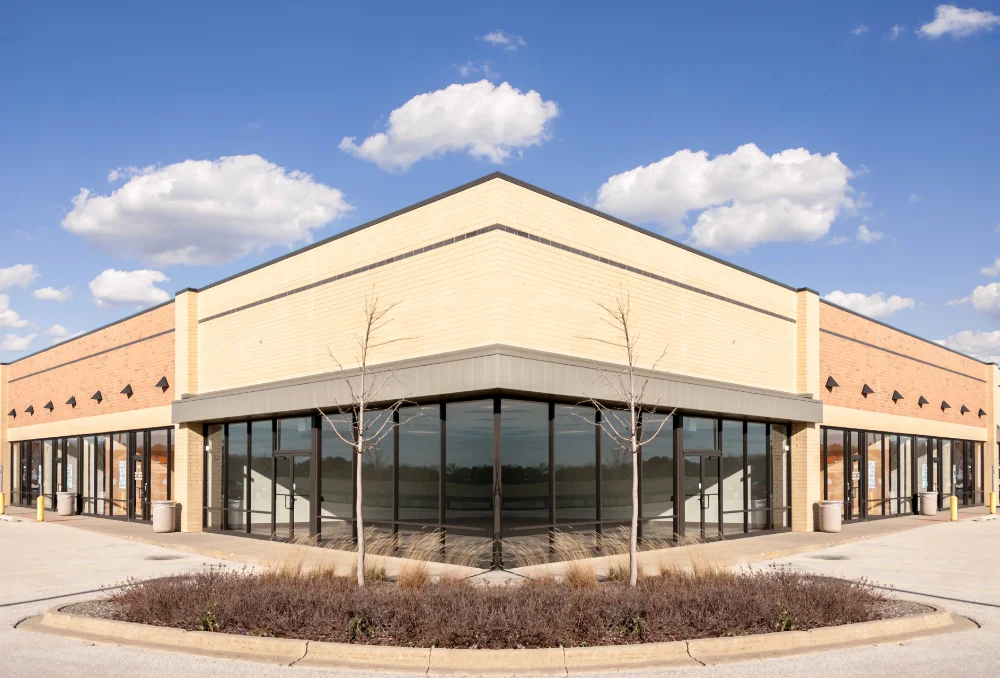
When a commercial opening is broken out, the job in front of everybody is closing it, and that is what a board-up does. We cut and fix panels over the opening, clear the broken glass out of the frame and off the floor so the site is safe to work in, and protect what is inside until the replacement lite has been made.
Out-of-hours calls on commercial emergencies are picked up, and what we do on those calls is get the building secured. Our regular office hours are Monday to Friday, 7:30am to 5:00pm. We have handled commercial glass since 2010, across a 50 mile radius of Phoenix.
What should you do before we arrive?
Four things, and two of them are hard to undo if you get them wrong in the first ten minutes.
- Do not sweep up the glass if there is any chance of an insurance claim. This is the one people get wrong, usually out of a sensible instinct to tidy. Commercial property policies typically require damaged property to be kept available for the adjuster to examine. A swept and skipped storefront is a claim with no evidence attached to it.
- Photograph everything before it moves. Wide shots showing the whole elevation, close shots of the frame and the break, the interior looking out, and anything disturbed inside. More frames than you think you need, and take them before the adrenaline wears off.
- Keep people away from the opening. Broken tempered glass sits in a frame in a state that can let go without warning, and a hanging fragment over a doorway is a genuine hazard. Move staff and customers back, rope it off if you have anything to rope it with, and do not let anybody step through the frame to get inside.
- Write down what you find and when. Time of discovery, who was on site, what is missing, what is damaged. Adjusters ask, and memory gets worse across a bad morning.
Then call us with the address and a description of what the opening looks like. If you can send one of those photos, do.
What happens during a board-up?
The visit is less dramatic than the event that caused it. In rough order:
- Loose glazing comes out first. A panel screwed over a frame still holding jagged shards leaves glass in the opening, and it will come down later. So the frame gets cleared before anything is fixed to it.
- The debris on the ground gets dealt with. Once your photos are taken and any adjuster requirement is satisfied, the floor and the sidewalk have to become safe to stand on. Tempered fragments travel further than people expect.
- Panel is cut to the opening and fixed in place. Depending on what the frame will accept, it is secured to the framing itself or through-bolted to bracing on the inside. The perimeter gets closed up so wind, dust and rain are not coming through the edges.
- The interior gets protected. That may mean covering stock, fixtures or flooring below the opening before any of the above happens.
What you end up with looks temporary, because it is. A board is not a security product and it will not stop somebody determined with time and tools. What it does is close the building, stop the loss growing, and let you open in the morning.
Why do we secure the opening before we measure it?
Because those are three separate jobs with three different clocks: secure, measure, glaze. Doing them in that order is what gets a building closed today. Trying to collapse them into a single visit is exactly what leaves a business sitting exposed for days.
The reason is plain. Your replacement lite has not been made yet. It gets built to your opening, and nobody anywhere in the valley keeps it on a rack. So a crew that waits to arrive until the glass is ready is a crew that arrives long after the building needed closing. We split it. The board goes on now. The measurement is taken properly, often on the same visit once the frame is clear enough to measure. The glass is ordered against that measurement and installed when it comes back.
Which is another way of saying that a board-up is a bridge rather than a repair. Anyone treating it as the finished job is doing you a disservice, and any building left boarded for months is a building whose owner stopped answering the second half of the question.
What breaks a commercial opening in Phoenix?
Three causes account for nearly all of it, and they leave different damage behind. A broken panel in a guard is its own case, since the guard has a load to carry and cannot simply be boarded and forgotten, and that sits under glass railings and guards.
Break-ins and vandalism
Tempered glass in a storefront or an entry door dices into small blunt pieces when it fails, by design, and the practical consequence is that the whole opening empties in one movement. There is rarely a partial break to patch or tape. Damage is often concentrated at one panel near a lock or a door, and the interior may have been disturbed as well, which matters for both the police report and the claim.
Storm and monsoon wind
Losses in monsoon season come from wind and what the wind is carrying, rather than from rain. A microburst is a short, violent, extremely local event, which is why one building loses two lites and the one across the parking lot loses nothing. Blowing grit and debris pit and chip glass that does not break outright, and a chipped edge is a panel that fails later under load.
Vehicle impact
A car into a storefront is the one that most often turns a glass job into a framing job. The aluminum takes the load along with the glass, and mullions get bent, sills get torn, and anchors get pulled. We can still board it, but the measurement waits until whatever is holding the opening up has been made square and sound again.
Who else should you call besides us?
Your insurer, and the police if a law has been broken. Most commercial property policies require you to notify law enforcement when the loss involves a break-in, theft or vandalism, and the report number becomes part of the claim file. Get it early rather than reconstructing the incident for an officer two days later.
If you lease, the landlord or property manager needs to know now, because the lease usually decides who authorizes the repair and who carries the deductible. If you are a manager acting for an owner, the useful thing you can do in the first hour is establish who is approving the spend, so the quote does not sit in an inbox while the building stands boarded.
How does a commercial property claim treat a board-up?
Standard commercial policies place a duty on the policyholder to take reasonable steps to protect the property from further damage after a loss, and to keep a record of what those steps cost, including labor hours. That duty is why securing the building is normally treated as a covered mitigation expense rather than money you simply absorb.
It runs the other way too. An opening left standing wide open overnight, when it could have been closed, is the kind of detail that gets raised if a second loss follows the first.
We invoice board-up work itemized, with labor hours shown separately, because that is the form adjusters ask for. What your policy covers is between you and your adjuster, and we will not tell you it is covered when we have not read your policy.
Why can the permanent glass not go in today?
Because it is fabricated to your opening, and the single fact that governs the whole schedule is this: tempered glass cannot be cut, drilled or notched after it has been heat treated. Heat treatment leaves the surfaces in compression against a core in tension, and any cut into that releases the entire panel at once. Every dimension, hole and edge detail gets finished in the annealed state, ahead of the furnace. Nothing is trimmed on site.
So a measurement taken wrong is a re-order, not an adjustment, which is why we measure a cleared frame rather than a frame full of broken glass. Where the opening takes an insulated unit, local Phoenix fabricators assemble it and return it inside five to seven days. Laminated glass behaves differently, and it can be cut on site, which occasionally opens up options a tempered specification does not.
Hardware and stock size items are the exceptions to all of this, since those are catalog parts. Where a job turns out to be a closer, a pivot set or a stock sliding panel, it can often be finished without a fabrication wait. Storefront lites almost never are, and storefront glass and entry doors goes into how those are measured and specified.
What can you expect if it happens outside our regular hours?
Call the number. Calls that arrive outside office hours on a commercial emergency get answered, and the object is getting your building closed.
We publish no response window and no callback promise, and we would treat any glass company that does with suspicion, because what is possible depends on where the property sits, what the opening looks like and what the frame will hold. Tell us the address and what happened and you will get a straight answer about what we can do rather than a number designed to sound reassuring.
What drives the cost of a board-up and the glass that follows?
No prices are published for commercial work, because a board-up on a single ground floor bay and a board-up across four bays under a canopy are not the same job. What moves it:
- The size of the opening and how many openings there are.
- Height and access, since anything above the ground floor changes the equipment and the crew.
- How the panel has to be fixed, which depends on what the framing will take.
- Whether debris removal is a sweep or a genuine clean-up with fixtures and stock involved.
- Time of day, and whether the site is occupied while we work.
The replacement glass is quoted separately after a site measure, and nothing is owed until you have that written quote. Once it is approved we take 50% before the order goes to the fabricator, for the reason above: a lite cut to your opening cannot be sold to anybody else. How that sits alongside the rest of a commercial scope is set out on the commercial glass hub.
Is a board-up secure enough to leave overnight?
It closes the building and keeps weather, dust and opportunists out, and for most properties that is enough to trade the next morning. It is not a vault. If the contents are high value, or the same address has now been hit more than once, treat the interval before the glass arrives as a security question and not only a glass question. An alarm response, a camera pointed at the opening or a night presence may be the right call, and those are not services we sell, so we have no reason to talk you into or out of them.
Questions after a break-in or a storm
Who is responsible for securing a leased building, the tenant or the owner?
The lease decides it, and the two common patterns split along whether the glass is part of the premises or part of the building shell. What we would say practically is that arguing about it while the front stands open helps nobody. Somebody authorizes the board-up, the invoice is itemized, and the parties settle who carries it afterward with a document in hand.
Where do you respond to commercial emergencies?
Across the Phoenix metro, out to 50 miles. Paperwork goes to 4202 E Elwood St #21, Phoenix, AZ 85040, a yard and shop with nothing on display and no reason for anyone to drive to it. The work happens at your property.
Should we clean up the broken glass before you get there?
No, not if you are claiming. Photograph it and leave it where it fell. Your policy most likely requires damaged property to stay available for examination, and clearing it early makes the claim harder to substantiate. Keep people away from it instead, and we will handle the removal.
Can you board an entry door and still let staff in?
Usually. If the door itself is gone, we can often board the opening and leave a working access point elsewhere, or panel the door in a way that still latches. Tell us on the call which door your staff and deliveries use, because it changes how we plan the panel.
Will boarding damage the frame?
We fix to the framing where it will take fasteners and to interior bracing where it will not, and on a finished aluminum front we would rather bolt through to the inside than put holes through a face that has to be re-glazed later. Where a frame has already been bent by an impact, additional damage is not the concern; getting the opening closed is.
Can the glass go back in on the same visit?
Only where it is hardware or a stock size. Custom lites are made to the measurement taken after the frame is clear, so the board comes first and the glass follows once it has been fabricated. The date goes on your written quote.
The same opening keeps getting broken. What are the options?
Laminated glass is the first thing to look at. It cracks, but the interlayer holds the pieces together, so the panel stays in the frame and takes considerably longer to get through than tempered does. It costs more and it is worth pricing against what a repeat loss and a repeat closure cost the business. We will quote both when we measure. Whether laminated is required or optional in a given opening is covered under tempered and safety glass.
What does the warranty cover on the replacement glass?
A lifetime limited warranty sits on our workmanship and runs for the length of your ownership. Setting, glazing and seal are what it covers. The glass itself keeps whatever the manufacturer provides. A later break is a new job rather than a warranty claim, though if an opening keeps failing we would rather solve that than keep replacing the same panel.
Call it in
Call (602) 777-3717 with the property address and a description of what happened. Photograph the damage first and leave the broken glass where it is. For the glass that goes back into the opening afterward, see storefront glass and entry doors, and for interior glass walls damaged in the same incident, see office partitions and interior glass.
Which cities do we cover?
We measure and glaze commercial property across the metro, inside a 50 mile radius of the shop on Elwood Street.