
Chip repair takes about half an hour, and two things decide whether yours qualifies.
Windshield Chip Repair
Windshield Chip Repair
Windshield chip repair in Phoenix
Family owned and operated since 2010
Chip repair runs $75 to $150 and takes about half an hour
Free mobile service across Maricopa County, within 50 miles
A Lifetime Limited Warranty backs every auto glass job
A Price Match Guarantee for cash jobs
Zero deductible windshield replacement with comprehensive glass coverage
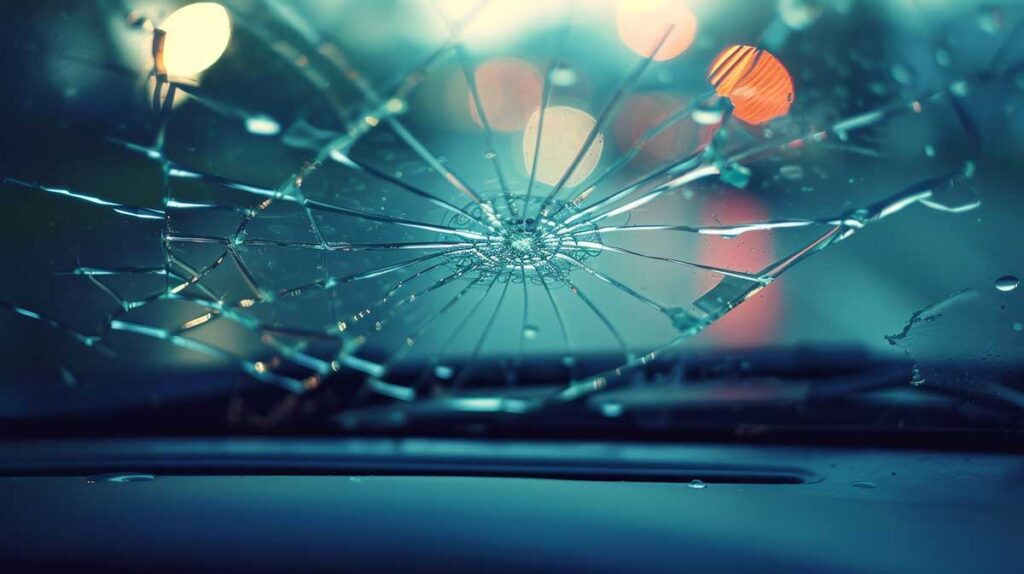
Chip repair runs $75 to $150 and takes about half an hour. Whether your damage qualifies comes down to two things we can settle in one phone call: how big it is, and where on the glass it sits.
The rule we work to is simple. A chip smaller than a quarter, or a crack shorter than a dollar bill, fills and cures. Anything past that and the resin cannot carry the load across the break, so the repair holds for a while and then lets go, usually on a hot afternoon when you had stopped thinking about it.
Can my chip be repaired, or is this a replacement?
Bring the quarter and the dollar bill to the glass and you have most of your answer. Star breaks, bullseyes and combination breaks inside that quarter footprint are routine repairs. Long cracks are not, no matter how thin they look, because a crack that has already traveled has already found the path of least resistance through the laminate and resin does not undo that.
Two other things push a job from repair to replacement regardless of size:
- The break has gone through the inner pane, not just the outer one. A windshield is two layers of glass with plastic between them. Damage that reaches the inside surface cannot be filled from outside.
- The chip has been open for weeks and has taken on dirt, wax or car wash detergent. Contaminated pits fill unevenly and the finished repair stays cloudy.
Send us a photo with something familiar next to the damage for scale and we will tell you which conversation we are having, without you driving anywhere first.
Why does position overrule size?
Because a repaired chip is not invisible, and where you leave the faint mark matters more than how small it was. Damage sitting in the driver’s direct line of sight gets replaced even when it falls well inside the quarter rule.
Here is the reasoning. Resin fills the break and stops it spreading, but it never restores the optics of unbroken glass. What remains is a small area where light bends slightly differently to the glass around it. Park that faint distortion low in the passenger corner and no one ever notices. Park it in the sweep of glass your eyes track through at 75 on the 101, in low sun, with headlights coming the other way, and you have traded a chip you could see for a smear you have to look past every day. That is a worse windshield than the one you started with, which is why we say no to repairs there even when the customer would rather save the money.
What happens during a resin injection?
The work itself is unhurried and mechanical. There is no mystery to it, and any shop that will not explain it is hiding a rushed job.
- We clean the pit and, on a star or combination break, open the impact point slightly with a fine bit so the resin has a route into the legs of the break.
- An injector bridge suctions onto the glass directly over the damage and seals against it.
- We pull a vacuum through the bridge. This is the step a rushed job skips. Every break is full of trapped air, and air left in the legs is air the resin cannot replace.
- Pressure goes on and acrylic resin is forced into the void until the legs go clear and stop taking material.
- A pit filler goes over the surface pit, a curing strip goes on top, and ultraviolet light hardens the resin. Then we scrape the surface flat with a razor and polish it.
Cure is immediate under the lamp. You drive away from a chip repair the moment we finish, with no waiting period and nothing to avoid, which is a different situation from a full replacement.
What will the chip look like afterward?
Better, not gone. Expect the break to lose most of its silver flash, since that silver was light reflecting off trapped air and the air is what we removed. What tends to remain is a faint blemish at the original impact point, visible if you know where to look and easy to miss if you do not.
We say this before we start rather than after. Chip repair is a structural fix that stops a break from running and keeps the original factory seal intact. It is not a cosmetic procedure. A customer who wants the glass to look untouched wants a new windshield, and we would rather tell them that in advance than take the repair fee and hand back something they are unhappy with.
Why do chips in Phoenix fail in July rather than gradually?
This is the local mechanism, and it explains most of the emergency calls we take between June and September.
A car parked out through a Phoenix afternoon has a windshield that has been absorbing direct sun for hours. The outer surface climbs far above the air temperature, well past what the cabin reaches, and the glass sits there loaded with that heat. Then you get in, start the car, and put the air conditioning on full pointed at the windshield.
Cold air hits the inside face while the outside face is still baking. Now the two panes of a laminated windshield sit at temperatures far apart, and each wants to be a different size. That difference is a steep gradient across the laminate, and it builds in minutes, not hours. A chip is a stress concentrator sitting in the middle of that field. The break tip is where all of that tension finds its outlet, and it moves. What was a quarter-sized star at lunch is a fourteen inch crack across the passenger side by the time you get home, and no amount of resin fixes that afterward.
Winter here does the same thing in reverse on a cold morning with the defroster on high, but summer is when we see it constantly. A stable chip in Phoenix is not stable. It is waiting.
How can I keep a chip from running before my appointment?
You can buy yourself time, and it costs nothing.
- Park in shade or a garage if you have one, and use a sunshade if you do not. Keeping the glass cooler keeps the gradient shallow.
- Start the air conditioning on low and aimed at the footwells, then bring it up over a few minutes. Do not blast the windshield with maximum cold on a hot car.
- Put a piece of clear packing tape over the chip. It keeps dirt and water out of the pit, which protects the quality of the repair. Tape does nothing structural.
- Take the freeway expansion joints and the potholes gently. Flex through the glass works on the break tip the same way heat does.
None of that is a fix. It is a way to reach Tuesday morning with the same chip you had on Friday.
Why is a chip near the edge the one that spreads?
Edge damage is the case we treat with the least patience. The perimeter of a windshield is where the urethane bond carries the load between the glass and the body, and it is where the glass is under the most tension in normal driving. Twist the body over a driveway lip and that stress runs around the edge.
A break within about two inches of the perimeter sits inside that band, and it tends to run in one direction, straight for the edge, then along it. Edge cracks also spread with less provocation than a chip in the middle of the glass. We generally will not repair inside that zone, even for damage that would be a straightforward fill anywhere else, because a repair that fails within the month is worse than an honest answer today.
What if the chip is over the camera area?
Late-model vehicles carry a forward-facing camera behind the mirror, and it watches the lane through a narrow window of glass right in front of the lens. Damage in that patch, or a repair in that patch, changes what the camera sees.
Resin has a slightly different refractive index to glass. A driver looks past that. A lane-keeping camera measuring where a painted line falls in its frame does not, and the result can be a system that reads lane position wrong or drops out with a fault. We look up the camera window on your vehicle before quoting a repair anywhere near the mirror mount, and if the damage is inside it, we recommend replacement and calibration instead. The reasoning behind that procedure is covered on our ADAS calibration page.
Will my insurance pay for a chip repair?
Often, in full. Arizona statute ARS 20-469 gives the vehicle owner the right to choose the repair shop, so your carrier can suggest a network shop but cannot assign you one. A zero deductible on glass is common on Arizona policies that include comprehensive glass coverage, and where yours does, a repair is normally paid in full with nothing owed by you.
Carriers like paying for repairs. A fill costs them a fraction of a replacement, and many of them waive the deductible on repair specifically to keep you from putting it off. We bill the insurer directly and complete the claim paperwork ourselves. You give us the policy number and roughly when the rock hit, and we take it from there.
Where do you repair chips, and how soon?
At your address, in most cases. Mobile service is free everywhere in Maricopa County and we work out to a 50 mile radius, so a repair in Peoria, Gilbert or Buckeye carries no travel charge. A chip repair needs a parked car and a bit of shade, so an office lot or a carport works. Our techs run out of 4202 E Elwood St #21, Phoenix, AZ 85040, a service facility rather than a showroom, so every chip job is booked by phone and comes to you. We take calls Monday to Friday, 7:30am to 5:00pm.
Same-day slots are common on chips because the job is short. If you call in the morning with a fresh chip, there is a fair chance a tech is at your car before the afternoon heat gets to it. Mobile service means your driveway, an office lot or a job site, and it costs nothing extra anywhere in Maricopa County.
What if it is too far gone to repair?
Then it is a windshield, and we will say so plainly instead of taking your money for a fill that will not hold. Glass and installation on a car or crossover run $300 to $500, and on a full-size truck or a large SUV $350 to $600. If your vehicle has a camera, calibration is quoted separately at $300 to $600 for a standard procedure. Luxury and exotic vehicles are quoted on their own. The whole pricing picture, including what changes it, is broken down on our windshield replacement cost page.
A replacement takes longer than a repair but not much. The car is safe to drive one hour after installation and the adhesive reaches full strength at 24 hours. Skip the car wash that first day and leave a window down about an inch overnight, so closing a door pushes air out rather than against a bond still setting. Calibration adds 45 to 60 minutes for a dynamic road procedure or 1.5 to 2 hours for a static one with targets, whichever the manufacturer specifies. The step by step is on our windshield replacement page.
Questions we get about chipped windshields
Who should look at a chip that appeared this morning?
Someone with a vacuum injector, today if you can manage it. A fresh break is clean inside, and clean breaks take resin better and finish clearer than ones that have been collecting road film for a month. Age is the one variable entirely within your control.
Where on the windshield can damage not be repaired?
Three zones: the driver’s primary viewing area, the outer perimeter of the glass, and the camera’s viewing window on vehicles equipped with one. Damage in any of those gets replacement rather than a fill, and the reasons differ in each case.
Who pays if the repair fails and the crack runs later?
We do. If a chip we filled spreads, the amount you paid for the repair comes off the price of the replacement. That is how the work should be quoted and it keeps our judgment about what to repair honest.
How many chips can you fix on one windshield?
Usually up to a handful, provided they are spread out and none sit in the exclusion zones. Several breaks clustered close together are a different situation, because the glass between them is already weakened and repairing one can pull on the next. At that density we look at replacement.
Does a repaired chip pass the load test if I sell the car?
A properly filled break restores most of the strength of the glass and does not have to be disclosed as damage in Arizona. What buyers see is the faint mark at the impact point. If the vehicle is going to a dealer for appraisal, a repair is far less of a deduction than an open chip or a running crack.
My chip has a small crack coming off it. Still repairable?
Depends on the leg. A short leg off a star break, well inside that dollar bill length and away from the edge, fills with the rest of the damage. A leg that has already turned and started to travel is a crack now, and it gets treated as one.
Can you repair a chip in the back glass or a side window?
No, and no shop can. Those are tempered glass, which is built to break into small pieces rather than crack, so there is nothing for resin to bridge. A damaged back glass gets replaced, which is covered on our rear window replacement page. Only laminated windshields are repairable, and the difference between the two is explained in our auto glass terminology notes.
Is the repair guaranteed not to spread?
The workmanship carries our lifetime limited warranty, and we have been repairing glass in Phoenix since 2010, long enough to know which breaks hold. What we guarantee is the fill and the credit toward replacement if it fails. What no one can guarantee is that a fresh rock will not hit the same windshield next week.
Call (602) 777-3717 with a photo of the chip and we will tell you within a minute whether it fills or whether the glass has to come out, along with the price either way. Prefer to look around first? Everything we handle is listed under auto glass repair and replacement, and our standards for a glass job done right spell out what to expect on the day.
Need something else on your vehicle?
We do every kind of auto glass, not only windshield chip repair. Windshields, back glass, door glass and quarter glass, plus the calibration that has to follow on anything with a camera. Tell us what’s happened and we’ll tell you what it takes: call (602) 777-3717 or see auto glass repair and replacement in Phoenix.