
A broken single pane can often be measured, cut and fitted on the same visit.
Single Pane Glass
Single Pane Glass
Single pane glass replacement in Phoenix
Family owned and operated since 2010
Annealed and laminated glass, rollers and standard balances stocked on the truck
Free written quote after a technician measures on site
A Lifetime Limited Warranty backs our workmanship
A Price Match Guarantee
50 mile service radius across the Phoenix metro
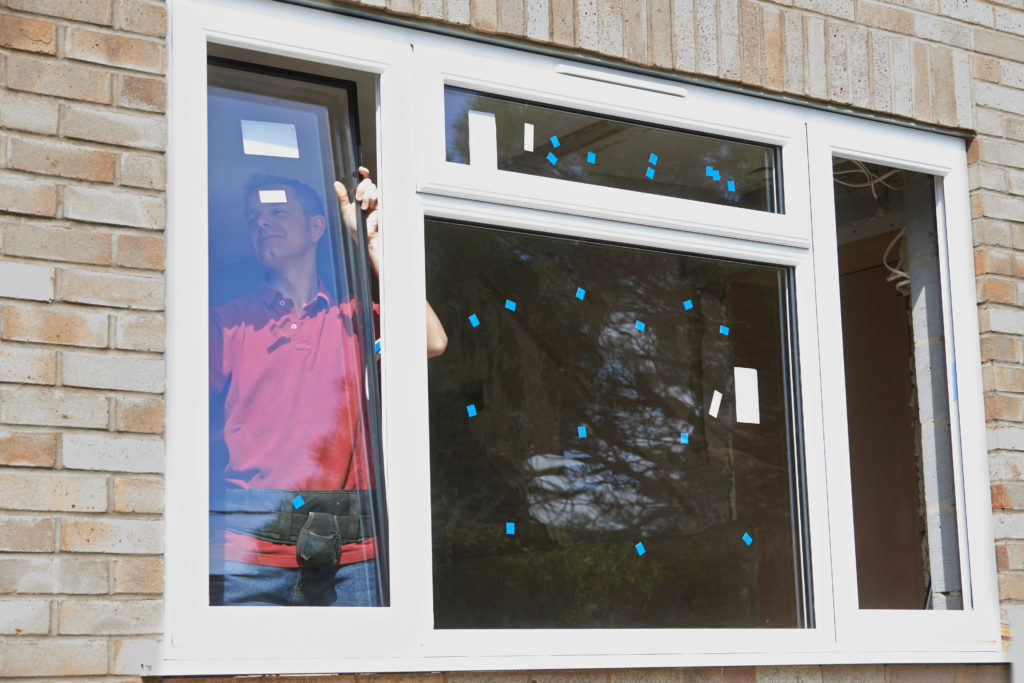
A broken single pane window can often be measured, cut and fitted on the same visit. Our trucks run stocked with single strength and double strength annealed glass plus clear and bronze laminated, so for a standard opening the glass that goes in was already on the van when it pulled up your driveway. Nothing in residential glass moves faster.
Single pane is far from finished in this city. Homes built before the mid 1990s were glazed with it as standard, thousands still carry their original lites, and almost every exterior swing door with glass in it holds one piece of safety glazing rather than a sealed unit. Superior Replacement Windows has been cutting and setting it across the valley since 2010.
Can a broken single pane window be handled in one visit?
Often, yes, and here is the test. If the opening takes annealed or laminated glass in a size and thickness we carry, the technician measures the sash, scores and snaps the piece at the truck, cleans the channel and sets the new lite before he leaves. That covers a broken bedroom window, a kitchen lite, a door sidelight and most fixed panes.
Two things push the work to a second visit. The first is tempered glass, which has to be made to size at a fabricator. The second is anything out of the ordinary: an oversize lite, an obscure pattern we do not stock, a tinted or coated piece, or a sash that turns out to be bent. In those cases visit one is a measure and a written quote, and we book the fit for when the glass lands.
What rides on the trucks
- Single strength annealed at about 3/32 of an inch, for small lites and older wood or aluminum sash.
- Double strength annealed at 1/8, the workhorse for standard residential openings.
- Clear laminated, which satisfies safety glazing and takes a score line on site.
- Bronze laminated, for doors and sidelights on elevations already running bronze glass.
- Common patio door and sliding window rollers, plus standard-size window balances, because the glass is not always the part that failed.
That last line matters more than it looks. A fair share of the calls we take about a window turn out to be hardware. If a patio panel drags across its track, start with sliding glass door repair. If a sash slams down the instant you let go of it, the balance is the culprit and window balance replacement is the page you want.
What counts as single pane glass?
One piece of glass in the sash. No spacer bar, no captured air gap, no perimeter seal. Since there is no cavity, single pane cannot fog internally, which is a failure reserved for sealed units and dealt with on our foggy window repair page. Condensation on a single pane forms on the room side in winter, wipes away with a cloth, and tells you about indoor humidity rather than about the window.
Glaziers call the individual piece a lite whatever its size, and the moving part it sits in a sash. If those words are new to you, our window and glass terminology page runs through the rest of them.
Annealed, tempered or laminated?
Annealed is float glass cooled slowly off the line. It scores and snaps cleanly, it stays optically flat, and it breaks into long sharp shards, which is exactly why code keeps it away from doors and low openings. In a fixed lite over a countertop or a bedroom window well above the floor it does its job for decades.
Tempered is annealed glass reheated near its softening point and then chilled fast at the faces. That leaves the surfaces in compression, roughly four times harder to break, and when it finally gives it comes apart into a heap of blunt cubes instead of blades. It is the default anywhere a person could fall against the glass.
Laminated is two thinner lites with a plastic interlayer between them, pressed and heated until the sandwich behaves as one piece. Break it and the fragments cling to the interlayer, so the opening stays covered until we get there. It meets the same safety glazing requirement as tempered, it screens out most ultraviolet on its own, and it accepts a score line, which is why it lives on the truck.
Where does the code require safety glazing?
Safety glazing means tempered or laminated, and the building code calls for it in what it labels hazardous locations. The ones that come up in a house:
- Glass set into any door, whether it swings, slides, folds or comes in a French pair.
- Panels beside a door, where the glass sits within 24 inches of the door edge and its bottom is less than 60 inches above the floor.
- Panes larger than 9 square feet with a bottom edge under 18 inches, a top edge above 36 inches, and a walking surface within 36 inches.
- Anything within 60 inches of the drain of a tub, shower, steam room, hot tub or pool, measured from the standing surface.
- Glass beside stairs, landings and ramps within 36 inches of the walking surface.
- Glass forming part of a guard or a railing.
Those distances are why our technician measures more than the opening. He is working out how close the glass sits to a door swing, a step and a bathtub, because the answer decides what product belongs in that sash. Where a location reads as borderline we glaze it as safety glass.
Why does tempered take longer than annealed?
Because it cannot be cut, drilled or notched once it has been heat treated. The stress pattern locked into a tempered lite is the source of its strength, and the moment a score wheel breaches the compressed surface the whole sheet relieves itself into gravel on the bench. Every dimension, hole and notch has to be settled before the glass ever enters the furnace.
A tempered piece therefore follows a different path from an annealed one: measure at the property, order to those exact sizes, wait on the fabricator, then come back and fit. When a door lite or a sidelight is broken and the house is standing open, that wait is the whole problem. Clear or bronze laminated is usually the way out, since it satisfies the same requirement and we can cut it in your driveway.
How thick does the glass need to be?
The opening decides, not taste. Glass behaves like a plate loaded across its span, so deflection under wind climbs faster than area does and thickness has to keep pace. A small bathroom lite is happy in single strength at 3/32. Most bedroom, kitchen and hallway windows take double strength at 1/8. Past roughly nine or ten square feet we move up to 3/16, and large fixed picture openings and door lites tend to land at 1/4.
Two other factors pull thickness upward. Height above grade counts, because wind pressure rises on a second story. So does exposure: a west wall in an open subdivision takes far more of a monsoon gust than a lite tucked under a covered patio. The technician sizes it at the measure, so nobody asks you to work it out.
Which Phoenix homes and doors still run single pane?
Block ranch homes through central and south Phoenix, built across the 1950s, 1960s and 1970s, are single pane in aluminum frames unless somebody has changed them. Early tract subdivisions in Mesa, Glendale and Tempe are the same, and custom houses with steel or wood sash keep it too.
Doors are the other half of the picture. Entry door lites, sidelights, French door panels, arcadia panels, garage side doors and transoms all carry single pieces of glass, nearly always tempered. Even in a house where every window is dual pane, the doors are single pane safety glass, which is why we replace more of it in doors than most homeowners expect.
What breaks single pane glass here?
Impact leads by a distance. A mower or string trimmer flinging a piece of granite yard rock at a low window is the most common single cause we see, and it leaves a small cone-shaped chip with cracks running away from it. Monsoon debris does the same job in July and August, usually to a west-facing elevation, sometimes to several windows in one night. Birds are the other impact we get called about, and if that is what happened at your house, caring for a bird that strikes a window deals with the bird before the glass.
Thermal stress comes next. A lite shaded at its edges while the middle bakes expands unevenly, and once the tension at the cool edge passes what the glass can carry, a crack starts perpendicular to the edge and then wanders in a lazy curve across the pane. If your window split overnight with nothing touching it, that is what happened, and aftermarket film applied over old annealed glass makes it more likely. Doors add a cause of their own: a slam sets a lite vibrating inside a loose stop, and glazing putty gone chalky with age no longer cushions anything. Calls like that usually arrive with hardware trouble attached, which our residential window repair page deals with.
Should you step up to an insulated unit instead?
Sometimes it is worth doing and sometimes it is not, and the sash decides more than anything else. An insulated unit measures close to an inch across both lites and the spacer, while single pane sits at an eighth. A sash built for single pane has a shallow glazing channel that will not take a sealed unit, so converting means a new sash or new windows, not new glass in the old one.
Where the frame does accept a unit, the case is strongest on west and south walls that take afternoon sun in a room you spend time in, and on any window that runs a condensation line in January. It is weakest on a north-facing bathroom lite or a small fixed pane in a hallway. Custom insulated units are built by fabricators here in Phoenix and come back to us in five to seven days. Dual pane glass replacement covers how those units are put together, and window glass replacement explains how new glass drops into a frame you already own.
Where single pane still earns its place
It cannot fog, because there is no sealed cavity to fail. It goes back in fast when something hits it. It weighs less, which matters on an old single hung whose spiral and coil balances are already tired, since heavier glass shortens what life they have left. And in a door, laminated single pane buys you a fix today that a sealed unit never can. None of that makes it the right glass for a large west-facing living room window. It does make it the sensible answer for plenty of openings in a Phoenix house.
How we quote a single pane job
Step one is a call to (602) 777-3717 with a rough description: which opening, what broke, single or dual pane if you know. A technician comes to the property, measures the sash rather than trusting a number given over the phone, checks the location against the safety glazing rules, and hands you a written quote. Nothing is owed at that point and you are free to leave it there.
Approve it and, where glass has to be ordered, we take half the total up front. Cut-to-size glass fits exactly one opening in one house, so it cannot go back on a rack. Hardware and stock sliding door glass are exempt from that. For as long as the property is yours, our workmanship is covered by a lifetime limited warranty.
What moves the cost of a single pane job?
Product first. Annealed, laminated, tempered, obscure and tinted all sit at different levels, and code often takes the choice away from both of us. Size second, since area and the thickness that area demands climb together. Access next, because a lite above a pool deck or on a second story needs more setup than one you reach from the grass. Hardware last, if the stops, bead or gaskets are shot and have to be sourced.
We publish no figures for residential glass, and any number you find for your own window without a measurement behind it is guesswork. The site visit and the quote are free, and the quote is what holds.
Where do we work, and what are the hours?
Trucks load at 4202 E Elwood St #21, Phoenix, AZ 85040 and run 50 miles out in every direction: Phoenix, Scottsdale, Mesa, Tempe, Chandler, Gilbert, Glendale, Peoria, Avondale, Surprise and the smaller towns between them. That address is a shop rather than a showroom, so measuring and fitting both happen at your property. Phones and scheduling run Monday to Friday, 7:30am to 5:00pm.
Questions we get about single pane glass
Who will be at my house for the replacement?
A glazier, with the glass stock, the tools and the sealant already on his truck. There is no separate salesperson and no second crew when the piece can be cut on site, so whoever measures your opening is the one who glazes it.
Where does the cutting happen, at my house or at your shop?
Annealed and laminated get cut at your house, off the sheet stock racked on the truck. Tempered and obscure patterns are made to size at a glass fabricator before we return to fit them. Nothing gets cut indoors; the work happens at the van or on a bench outside.
Can I have obscure or patterned glass in single pane?
Yes. Rain, satin, glue chip and reeded patterns are all available as single lites. A bathroom window near a tub or shower has to be safety glazing, so an obscure lite there comes back tempered and is ordered to your measurement instead of cut on the truck.
Is single pane glass still allowed under Arizona code?
Yes. Replacing broken glass in an existing frame with the same type is permitted, and the safety glazing rules turn on location rather than on whether the glass is single or dual. Energy requirements drive dual pane in new construction and in whole-window replacement, which is a different scope from reglazing a sash.
Can laminated go in where tempered is specified?
In most residential hazardous locations, yes, since the code treats both as safety glazing. The exceptions we hold to are shower and tub enclosures, and any door where the manufacturer calls for tempered in that particular panel. Our technician confirms it before he cuts anything.
Will new glass in an old aluminum frame leak when it rains?
Not if the channel is prepared properly. We clear the old sealant and putty out, check that the weep holes along the bottom of the frame are open, set the lite on fresh blocks and reseal it. Most leaks homeowners blame on glazing turn out to be blocked weeps.
How long does a single pane window take to fit?
Twenty to forty minutes for a standard sash once the glass is cut, plus the cutting. A door lite with a bead that has to come off in one piece takes longer, and a large fixed pane needs two people and suction cups.
Call (602) 777-3717 on a weekday and describe the broken pane, and we will put a technician on the schedule to measure it. The rest of our residential glass services is worth a look if you are not certain which page fits, and home window repair covers the hardware side when the glass turns out to be innocent.
We work across the Valley, inside 50 miles of the shop on Elwood Street. Start with your city for what we see most in the housing stock there.
Where an opening needs a new frame rather than new glass, see window installation.