
A slider is four separate systems sharing one frame, and the fix depends on which one gave out.
Sliding Glass Door Repair
Sliding Glass Door Repair
Sliding glass door repair in Phoenix
Family owned and operated since 2010
Annealed and laminated glass, rollers and standard balances stocked on the truck
Free written quote after a technician measures on site
A Lifetime Limited Warranty backs our workmanship
A Price Match Guarantee
Nothing owed until you have the quote in hand
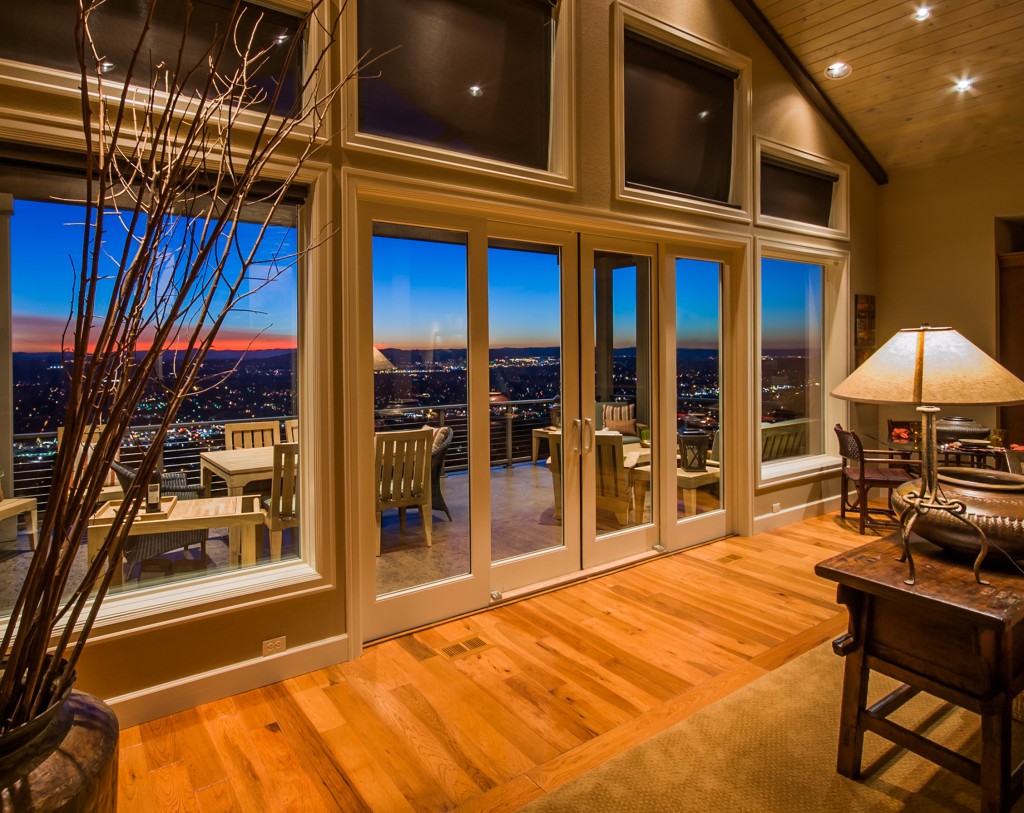
Tell us what the door is doing and we can usually name the part before anyone drives out. A slider is four separate systems sharing one frame, and the fix depends on which one has given up.
Call (602) 777-3717 Monday to Friday, 7:30am to 5:00pm. Glass, latches, screens and hardware are all in scope, and our glaziers carry laminated glass and common rollers on the truck.
What is your door doing?
Find your symptom here. Each one points at a different part of the door.
- It drags, or you need two hands to move it. Worn rollers, or grit packed hard into the rail. This is the most common slider call in the Valley, and our sliding door roller and track repair page covers it end to end, including how the parts get sourced for older doors.
- It lifts and drops as it travels, or hops off the rail. The rail itself has worn into a groove or split along its top edge. New wheels on a chewed up rail buy you a few months at best. The roller and track page explains the steel track cap that fixes this without pulling your frame out of the wall.
- The glass is cracked, chipped at an edge, or shattered. Door glass is its own job and it has to be safety glazing. Keep pets and kids away from it until a glazier has been out, particularly if the panel is tempered and already cracked.
- There is haze or moisture trapped between two panes. The sealed unit in the panel has lost its seal. Nothing to do with the hardware. Start with foggy window repair for what that means and what gets replaced.
- It will not lock, or you have to lift the door for the latch to catch. The panel has settled on its rollers, so the latch and the keeper in the jamb no longer sit at the same height. Sometimes it is the latch, more often it is the door sitting low.
- The screen is off, torn, or will not roll. Screen doors run on their own small wheels, a different and much lighter part than the ones under the glass panel.
- There is daylight at the top, or the door looks out of square in the opening. Either the rollers have collapsed unevenly, or the frame has moved and the door is telling you about it.
A photo of the bottom rail, taken from the outside with the door open, answers most of these before we schedule anything.
Why does everyone here call it an Arcadia door?
Arcadia door is the Phoenix word for a sliding patio door. Anywhere else in the country it is a slider, and if a contractor from out of state looks blank at you, that is why.
The name comes from the Arcadia neighborhood between Phoenix and Scottsdale, where ranch houses went up through the 1950s and 60s with wide sliding walls of glass opening onto the yard. The style was so tied to that district that the neighborhood name became the product name across the Valley, and it stuck for seventy years.
It matters for one practical reason. Plenty of genuine mid-century sliders are still in daily service in Arcadia, north central Phoenix and old Scottsdale, and their hardware has been out of production for decades. There is no catalog to order from. Those jobs turn on identifying what is in the door and finding a current part that fits the same housing, which is slower than a door built in 2005 and still costs less than replacing a door that is otherwise sound.
Does sliding door glass have to be tempered?
It has to be safety glazing, which is not quite the same question. A sliding patio door is a hazardous location under building code, so ordinary annealed glass is not permitted in it no matter how old the door is or what came out of it. Two glass types satisfy that requirement, and which one your door takes changes how quickly you get it back.
Tempered
Heat treated after it is cut, which is what gives it the strength and the crumble pattern instead of shards. The catch is in the sequence: once glass is tempered it cannot be cut, drilled or notched. A tempered panel is fabricated to your exact measurement and ordered in, so the door waits for it.
Laminated
Two lites bonded to a plastic interlayer. It meets the same safety glazing requirement, it holds together when it breaks because the interlayer keeps the pieces attached, and it can be cut on site. We carry clear and bronze laminated on the trucks, and that is often how a broken door goes back into service the same day rather than next week.
Laminated also cuts more sound and blocks more ultraviolet than a plain tempered lite, which matters on a patio door facing a busy street or taking direct afternoon sun. We will tell you at the measure which one your door can take, because the panel thickness and the way the glass is captured in the stile both have a say.
The panes have fogged. What happens to a dual pane door panel?
The sealed unit in that panel gets replaced and the door frame stays where it is. There is no way to dry out or reseal a unit that has lost its seal, and the drilling and venting services clear the view temporarily while leaving the failure in place.
Patio door units are the heaviest insulated glass in a typical house, so two things follow. The measure has to be exact, since panel thickness varies between manufacturers even when the outside dimensions look standard, and the panel usually comes out of the opening for the swap. Custom units are built by insulated glass fabricators here in Phoenix and come back in five to seven days. Common patio door sizes are quicker because stock glass is on hand.
While the panel is out is also the sensible moment to deal with rollers, since the door is already lifted. Our dual pane glass replacement page goes through how a sealed unit is built and specified if you want the detail behind what gets ordered.
Why will my sliding door not lock?
Nine times out of ten the lock is fine and the door has dropped. As rollers wear, the panel settles a fraction of an inch, and the latch that used to slide into the keeper on the jamb now hits the metal below it. The tell is that the door locks if you lift the handle end while you turn it.
What we look at, in order:
- Roller height. If the panel has sagged, raising it back into alignment is the actual repair and the latch was never the problem.
- The keeper. The strike plate in the jamb is often adjustable or can be shimmed, and on doors where the frame has shifted slightly that is the cleaner fix.
- The latch mechanism itself. Mortise latches in patio doors have a spring loaded hook that seizes with age and desert dust. Some are still made, some are matched by housing dimension rather than by brand.
- The handle set. Older Arcadia handle sets are frequently out of production, and the current replacements do not always land on the same screw centers, so we check the mounting before ordering anything.
Anti-lift and secondary locks are worth mentioning here. A slider that lifts far enough to clear the rail can be lifted out of its opening from the patio side, and a door that has been jimmied usually shows it at the latch. We will tell you what your door is doing on that front when we look at it.
What about the screen door?
Screen doors get treated as an afterthought and then become the thing everyone in the house complains about. They fail in their own ways: the mesh tears or gets pushed out of the frame, the spline that holds the mesh in its groove dries out and shrinks in the sun, the small rollers at top and bottom flatten, and the light frame bends if the door has been forced.
The rollers are the part to be clear about. A screen door rides on wheels far smaller than the ones carrying the glass panel, in a shallower rail, and they are a separate purchase and a separate repair. Replacing the glass door rollers does nothing for a screen that will not roll. Mesh and frame work is covered on our window screen repair and rescreening page, and the glass panel hardware sits on the roller and track page.
One limit worth stating plainly: we rescreen and repair. We do not sell or fit solar screens or security screens, so if that is what you are after, another company is the right call.
When is a slider past repairing?
We would rather repair your door, and on most calls that is the honest answer. Rollers, track caps, glass, latches and screens between them cover the large majority of what walks in. There are situations where repair is the wrong advice, and we will say so at the measure rather than take the work.
The first is corrosion. A sill rail that has rusted or corroded through no longer gives the rollers anything solid to ride on and will not hold a track cap, and in older homes with irrigation or a pool close to the patio we do see it. The second is break-in damage. When a door has been pried, the stile is usually bent along its length as well as damaged at the lock, and a bent stile does not hold glass square again. The third is movement in the opening itself. If the wall has settled and the frame is out of square, a new door will follow the same path the old one did, and the opening has to be dealt with before glass goes in.
None of those are things we patch over to make a sale. If your door falls into one of them, window and door replacement is the conversation, and framing, stucco repair and painting around the opening are outside our scope in any case.
What drives the cost of a sliding door repair?
We do not publish residential figures, because a screen rescreen and a nine foot insulated patio panel have nothing in common but the word door. Here is what the quote is built from:
- Which system failed. Hardware, glass, or both at once.
- Whether the part is current or discontinued. A 2010 door is a catalog lookup, a 1962 Arcadia door is detective work.
- Glass type and size, and whether the panel is a single lite or a sealed dual pane unit.
- Whether the panel can be cut on site from laminated stock or has to be fabricated and ordered.
- Access to the opening, including whether the patio side can be reached without going through the house.
How the quote, deposit and warranty work
A technician measures at your property and writes the quote there. Nothing is owed until you are holding that number, and the visit itself costs nothing.
Hardware jobs are usually finished on the same visit, so there is nothing to order and nothing to deposit. Where glass has to be cut to your door, a 50% deposit goes down on approval before it is ordered, for the simple reason that a panel sized to your opening cannot be sold to anybody else. Hardware and stock sliding door glass fall outside that.
Our workmanship carries a lifetime limited warranty for as long as the property is yours. We have worked glass in the Valley since 2010, and we run a 50 mile radius from 4202 E Elwood St #21, Phoenix, AZ 85040, which is a working shop rather than a showroom, so everything happens at your house.
Questions about sliding glass doors
Who repairs old Arcadia doors in Phoenix?
We do, and mid-century doors are a regular part of the work rather than a novelty. Tell us the approximate age of the house when you call, and send a photo of the handle set and the bottom rail if you can reach them, since that is what narrows down out of production hardware.
Where do you travel for sliding door work?
Fifty miles out of our Phoenix shop, which covers Scottsdale, Mesa, Tempe, Chandler, Gilbert, Glendale, Peoria, Surprise and the rest of the metro. If you are unsure whether your address falls inside that, ask on the phone and we will tell you straight away.
Can you fix a slider without replacing the whole door?
Almost always. Rollers, rails, glass, latches and screens are all serviceable parts, and the frame is the piece that rarely needs to leave the wall. Replacement is the answer for corroded sills, break-in damage to the stile, and openings that have moved.
My door glass broke tonight. Can you board it up?
Our residential hours are Monday to Friday, 7:30am to 5:00pm, so an overnight break means securing the opening yourself until morning. Call first thing and tell us it is an open hole, because a laminated cut on site is often what puts the door back the same day.
Is the glass in my patio door tempered or laminated?
Look for an etched stamp in a bottom corner of the panel, which is where the safety glazing mark usually sits. If there is no legible stamp, our glazier will identify it at the measure. Either way, the replacement has to be safety glazing.
The door came off its track completely. Have I broken something?
Usually not. A panel that lifts out has generally been riding on collapsed rollers for a while, and the door itself is often undamaged. Lay it flat somewhere safe rather than leaning it upright against a wall, because a leaning panel that slips is how a repairable door turns into a broken one.
Do you work on sliding windows too, or only doors?
Both. Most Phoenix windows are horizontal sliders and they use the same idea in a smaller package, with their own rollers and their own rails. Residential window repair covers those.
Will lubricating the track fix the dragging?
It might quiet it for a week, and it also collects the dust that grinds the wheels down. A clean dry rail is better than a greased one. If both adjustment screws are already wound to the top of their travel, no amount of spray is going to help.
Book a repair
Call (602) 777-3717 Monday to Friday, 7:30am to 5:00pm and describe what the door is doing, or send a photo of the bottom rail through the quote form. A technician comes out, measures, and writes the quote before anything is ordered. See residential glass and window services for everything else we handle at the house, and window terminology if you want the names for the parts before we arrive.
Which cities do we cover?
We work across the Valley, inside 50 miles of the shop on Elwood Street. Start with your city for what we see most in the housing stock there.